

If you’re shopping for family health insurance options this year, start with two checks: run a Marketplace eligibility screen for subsidies, and confirm whether your kids qualify for Medicaid or CHIP. From there, the main routes are Marketplace (ACA) plans, employer coverage, Medicaid/CHIP, short-term plans, and broker-assisted private medically underwritten plans, each suited to different budgets and health needs.
TL;DR:
- For 2026 coverage, enroll by December 15, 2025, for a January 1 start; applications through January 15 begin coverage February 1.
- Although 87% of 2026 Marketplace enrollees selected plans with premium tax credit assistance, cost sharing reductions require Silver coverage and depend on household income.
- Bronze often suits families expecting routine care, while prescriptions, chronic conditions, pregnancy, or planned surgery usually favor Silver or Gold after comparing yearly costs.
- A new baby, marriage, job loss, or move can open a Special Enrollment window lasting 60 days; contact the Marketplace promptly.
- Underwritten private plans require health questions, and approval, prices, or network access can change after review; compare them carefully if you lack subsidies.
Table of Contents
- What Are the Different Types of Family Health Plans?
- When Can You Enroll, and Who Can Help?
- How Do Subsidies and Cost-Sharing Actually Work?
- How Should You Pick a Plan for Your Family?
- Are Private Medically Underwritten Plans Worth a Look?
- A Broker’s Quick Take
- How We Can Help You Compare and Enroll
- FAQ
- Sources
What Are the Different Types of Family Health Plans?
Every family plan falls into one of a few buckets, and knowing which bucket you’re in tells you what protections you actually have.
Marketplace plans are sorted into metal levels, which describe actuarial value, or roughly what share of your typical costs the plan picks up versus what you pay out of pocket.
- Bronze plans cover a lower share of average costs, so premiums run low but deductibles run high.
- Silver plans cover more and are the only tier eligible for cost-sharing reductions.
- Gold plans cover a higher percentage, trading a higher premium for lower bills when you actually use care.
- Platinum plans cover the highest share, built for families who see doctors often.
- Catastrophic plans carry very low premiums and very high deductibles, reserved mostly for younger enrollees facing financial hardship.
Employer-sponsored coverage works differently. Your employer picks the plan menu, often covers part of the premium, and you enroll during a workplace window rather than through HealthCare.gov. Short-term limited-duration insurance is a separate category entirely: it’s built as a temporary bridge and often skips essential health benefits that Marketplace plans must include, so it rarely works as a long-term family solution. Private medically underwritten plans are a fourth lane: they ask health questions during the application and can offer different pricing and network structures, which we’ll walk through later.
When Can You Enroll, and Who Can Help?
Timing matters more than most families realize, because missing a date can mean waiting months for coverage to start.
- Mark the window. The 2026 Marketplace Open Enrollment Period runs November 1, 2025, through January 15, 2026.
- Hit the December 15 cutoff. Selecting a plan by December 15, 2025, starts your coverage January 1, 2026; enroll between December 16 and January 15 and coverage begins February 1, 2026.
- Apply through the right door. Use Healthcare or your state’s Marketplace site, and lean on the Marketplace call center, a certified navigator, or a licensed broker if you want someone walking through options with you.
- Watch for Special Enrollment triggers. A new baby, marriage, job loss, or move can open a 60-day window outside the normal schedule, so contact help quickly once a life change happens.
How Do Subsidies and Cost-Sharing Actually Work?
87% of 2026 Marketplace enrollees selected a plan with premium tax credit assistance, according to CMS’s enrollment snapshot, which means most families shopping on HealthCare.gov aren’t paying full sticker price.
Premium tax credits, often called APTC, lower your monthly bill based on household income and family size, and they apply automatically once you report your information during enrollment. Cost-sharing reductions go a step further, but only if you pick a Silver plan: they lower your deductible, copays, and coinsurance, sometimes significantly, for households that qualify.
- Premium tax credits reduce what you pay monthly, regardless of metal level chosen.
- Cost-sharing reductions only attach to Silver plans and lower your costs when you actually receive care.
- Both are based on estimated household income for the coverage year, so update your application if income changes.
CMS published a Silver versus Bronze cost comparison showing that for a family expecting medium to high health care use, a Silver plan with cost-sharing reductions can save thousands over a year compared to Bronze, even though the Bronze premium looks cheaper on paper. Before you settle on a Marketplace plan, also check whether your kids qualify for Medicaid or CHIP, since states evaluate eligibility household by household and often cover children even when parents assume they won’t qualify.
How Should You Pick a Plan for Your Family?
Think of your deductible as the toll you pay before your plan starts sharing costs, and your out-of-pocket maximum as the financial safety net underneath everything. Matching that structure to how your family actually uses care is the real decision.
- Estimate your usage honestly. Low use (occasional checkups) often fits Bronze; medium to high use (ongoing prescriptions, a chronic condition, a planned surgery, or a pregnancy) usually favors Silver or Gold.
- Check the network before the price. Confirm your pediatrician, specialists, and prescriptions are covered, and look specifically for pediatric benefits and immunization coverage.
- Run the full-year math. Compare monthly premium after subsidies against the total cost if someone in your family needs several visits or a procedure.
- Consider an HSA-eligible HDHP only if your costs are predictable and low. It won’t typically fit a family managing a chronic illness or expecting a baby.
- Ask direct questions during enrollment. What’s the deductible per person versus per family? Which local providers are in-network? Does this plan cover my current prescriptions?
Pro Tip: Call the pharmacy benefits line listed on a plan’s summary before you enroll, not after, so you know your exact prescription costs upfront.
Are Private Medically Underwritten Plans Worth a Look?
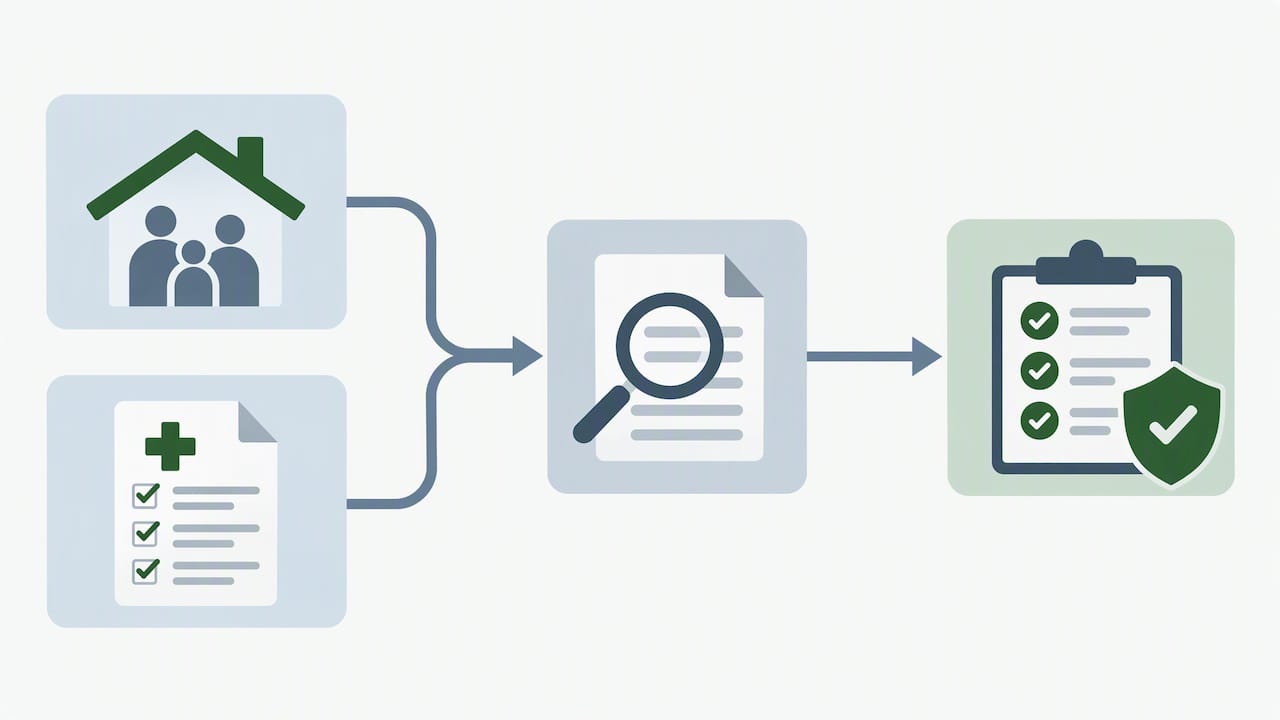
Private medically underwritten plans work differently from Marketplace qualified health plans. Instead of guaranteed issue, you answer health questions during the application, and approval, pricing, or network access can shift based on that review. For some families, particularly those who don’t qualify for subsidies, this route can mean a different premium and coverage design than what’s available on HealthCare.gov.
A broker review tends to add the most value for self-employed families, households above subsidy income thresholds, or anyone juggling existing coverage and a complicated health history.
Our role as brokers is to lay your real options side by side, Marketplace and private, so you’re choosing with full information instead of guessing.
What we do at the table:
- Run side-by-side comparisons between Marketplace and private plan designs.
- Provide access to private medically underwritten plan options not listed on public exchanges.
- Handle enrollment paperwork and follow-up questions after you’re signed up.
- Offer support in English or Spanish, so language never gets in the way of a decision.
A Broker’s Quick Take
If your family’s situation is simple, a quick Marketplace subsidy check will usually get you where you need to go. The moment things get complicated, self-employment income, a chronic condition, a pregnancy on the horizon, it’s worth pairing that subsidy check with a broker review before you commit to a plan.
— Bernie S
How We Can Help You Compare and Enroll
We built our advisory process around one idea: you shouldn’t have to choose blind between Marketplace listings and private coverage. We offer personalized plan comparisons with access to private medically underwritten options alongside standard Marketplace guidance.

- We review your household’s full picture, income, health needs, prescriptions, before recommending a direction.
- We give you access to private plan designs that sit outside the public exchange.
- We support enrollment in English or Spanish, with follow-up help after you’re signed up.
If you want a second set of eyes on your options, visit our personal and family insurance page and request a plan review.
This article is general information, not a substitute for advice from a qualified doctor. Consult a qualified healthcare professional about your own circumstances before acting on anything here.
FAQ
What is the best health insurance plan for a family?
There’s no single best plan; the right one depends on expected health care use, budget, and subsidy eligibility. Families with lower expected use often do well with Bronze, while families managing a chronic condition, pregnancy, or frequent visits typically save more overall with Silver or Gold despite the higher premium.
What is the average cost of health insurance for a family in the U.S.?
Costs vary widely by state, income, and metal level, and most families don’t pay full price. 87% of 2026 Marketplace enrollees selected a plan with premium tax credits, which significantly lowers the real monthly cost for most households.
When does Marketplace open enrollment happen for 2026 coverage?
The 2026 Open Enrollment Period runs November 1, 2025, through January 15, 2026. Enroll by December 15, 2025, for coverage starting January 1, 2026, or enroll by January 15 for coverage starting February 1, 2026.
What happens if a family can’t afford health insurance?
Families who can’t afford Marketplace premiums should first check Medicaid and CHIP eligibility, since states often cover children even when parents assume they won’t qualify. Going without coverage means facing the full cost of any care needed, so checking every assistance program available is worth doing before assuming nothing fits your budget.
How does financial assistance work for family health insurance?
Premium tax credits lower your monthly bill based on income and household size, while cost-sharing reductions lower deductibles and copays but only apply to Silver plans. Both are estimated during enrollment and adjusted based on the income you report for the coverage year.
Sources
These government resources back the figures and deadlines referenced throughout this guide, and they’re worth bookmarking for state-specific tools or updates.
