

If you earn too much for ACA subsidies in Florida, you have two real paths: an ACA plan at full price, or a private, medically underwritten PPO that is priced on your health history instead of a government formula. Which one wins depends on your health, your doctors and how much you value a wide network, and we’ll walk through that honestly below.
I’m Bernie Sobalvarro, a licensed independent broker (NPN 19189235). I talk with self-employed Floridians, small business owners and families every week who open a renewal notice and think, “There has to be a better way.” Sometimes there is. Sometimes the Marketplace is the right call. Here’s how to tell.
TL;DR
- “Private” can mean two different things: an ACA-compliant plan bought off the Marketplace, or a medically underwritten plan that follows different rules.
- High earners can still buy Marketplace coverage at full price. The subsidy is what goes away, not your eligibility to enroll.
- Underwritten private PPOs can offer broad networks and sometimes lower premiums, but the insurer looks at your health history before approving you.
- ACA plans must cover people with pre-existing conditions. Underwritten plans may not, so your health picture matters when choosing.
- A broker can compare both sides with you at no extra cost to you. We don’t offer Medicare or Medicaid.
Table of Contents
- What “private health insurance” means for a high earner
- Why high earners feel the squeeze in Florida
- Can you still use the Marketplace if you earn too much?
- Private PPO vs. Marketplace: an honest comparison
- How the ACA protections work in Florida
- Timing: when you can enroll
- Who we see choosing private plans in Florida
- What does it cost, and what moves the price?
- Premium, deductible and out-of-pocket max: how they work together
- What changes for the 2027 plan year
- Our perspective
- How to choose in five steps
- Add-ons worth pricing alongside your main plan
- Get a side-by-side quote
- FAQ
- Sources
What “private health insurance” means for a high earner
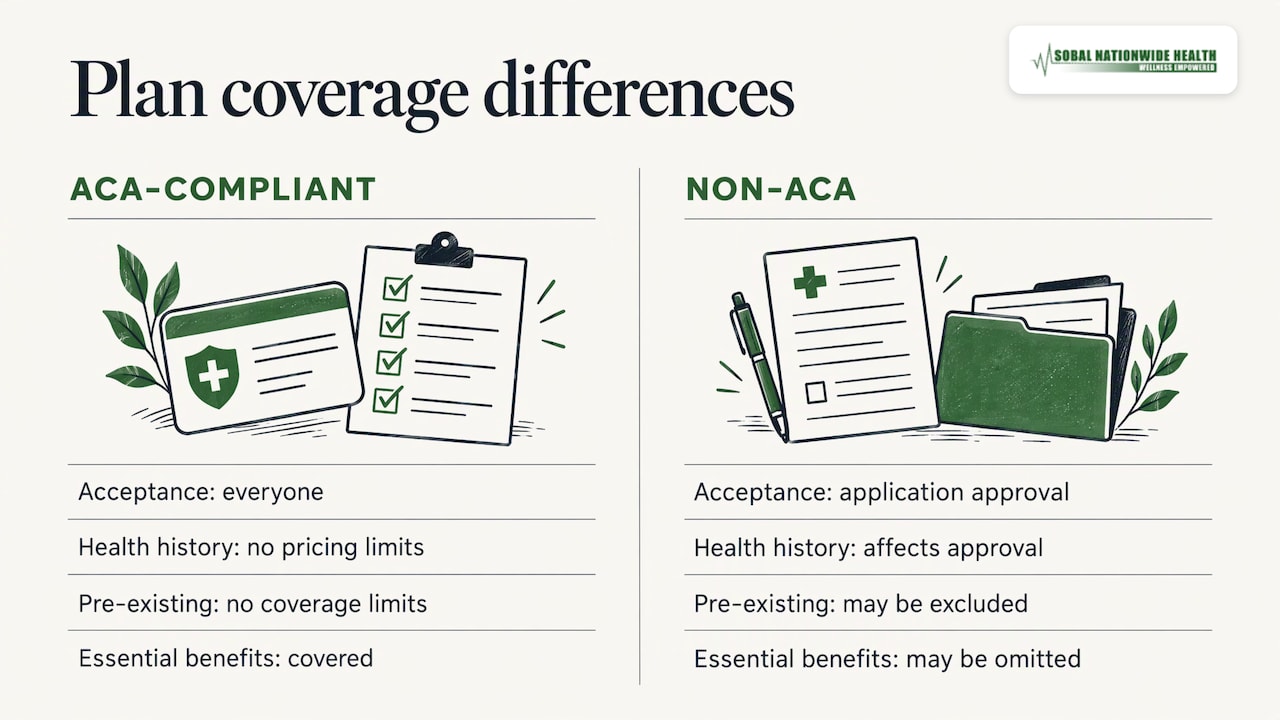
The phrase gets used loosely, so let’s pin it down. According to KFF’s guide to the ACA Marketplace, “private” can mean an off-Marketplace policy that still follows ACA rules, or a non-ACA product. The two behave very differently.
ACA-compliant plans (on or off the Marketplace) cover essential health benefits, accept everyone, and cannot charge more or limit coverage because of a pre-existing condition.
Non-ACA, medically underwritten plans use an application. The insurer reviews your health history and decides whether to approve you, at what price, and sometimes with exclusions. These plans may also have benefit limits or leave out some essential benefits, per the same KFF guide.
Neither is “good” or “bad.” They are built for different people. The premium gets you in the door, but what the plan does once you’re inside is what you’re really buying.
Why high earners feel the squeeze in Florida
HealthCare.gov explains that people with income between 100% and 400% of the federal poverty level qualify for the premium tax credit. KFF reports that for 2027 coverage, 400% of the poverty level is $63,840 for one person and $132,000 for a family of four.
So a self-employed consultant, a realtor having a great year or a two-income household can land above that line and pay the full sticker price. The subsidy simply isn’t part of the picture anymore.
That’s the moment many people start asking whether a private plan could cost less, or at least give them more for what they spend.
Can you still use the Marketplace if you earn too much?
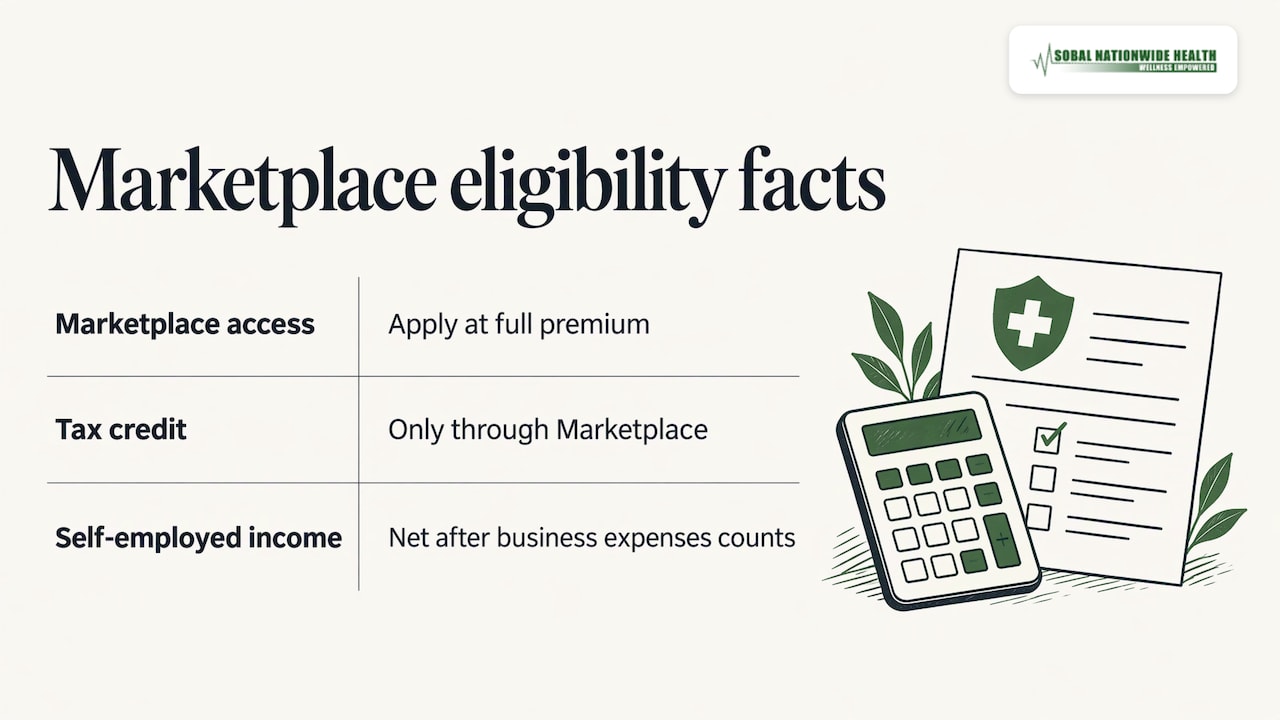
Yes. HealthCare.gov says people whose income is too high for a tax credit can still apply for Marketplace coverage. You just pay the full premium.
There is one more detail worth knowing. HealthCare.gov states that the premium tax credit is available only through the Marketplace, not for plans bought directly from an insurer or broker. If your income might drop, say a slow year for a 1099 contractor, keep that in mind before you move off the Marketplace.
Self-employed applicants report estimated net self-employment income after business expenses, according to the HealthCare.gov application instructions. Your net, not your gross, is what counts, so a real look at your deductions can change which side of the line you’re on. It’s worth running those numbers before you decide you’re “too high.”
Private PPO vs. Marketplace: an honest comparison
Here’s the side-by-side I use with clients. Both columns describe the general type of plan, not any single carrier.
| What you’re comparing | ACA Marketplace plan | Private medically underwritten PPO |
|---|---|---|
| Who can get in | Everyone, regardless of health history | Approval depends on your health application |
| Pre-existing conditions | Cannot be used to deny, surcharge or limit coverage | May be excluded or affect pricing |
| Essential health benefits | Required | Not always included |
| Network | Often narrower, tied to a plan or region | Often broad, with PPO plans offering nationwide options |
| Subsidies | Available if income qualifies | Not available |
| When you can enroll | Open Enrollment or a qualifying Special Enrollment Period | Many plans accept applications year-round, depending on the carrier |
| Premium | Full price for high earners | Often lower for healthy applicants, but varies by carrier and your profile |
What this table tells me: if you’re healthy, want to keep any doctor or hospital, and don’t need a subsidy, an underwritten PPO deserves a serious look. If you have a chronic condition, are planning a pregnancy or want the strongest guarantee of coverage, the Marketplace is built for you.
Our view is that you shouldn’t have to guess. We lay out both so you can pick on facts.
How the ACA protections work in Florida
The Florida Department of Financial Services says ACA individual coverage is guaranteed issue regardless of health history and carries no pre-existing-condition waiting period. That’s a real safety feature, and it’s why many families with ongoing medical needs stay on ACA plans even at full price.
The same KFF guide notes that non-ACA plans may exclude pre-existing conditions and offer more limited benefits. That doesn’t make them wrong for you. It means you should read what’s excluded before you apply, and match it to your own health honestly.
Timing: when you can enroll
KFF says ACA-compliant individual plans, whether on or off the Marketplace, are generally sold only during annual Open Enrollment or a qualifying Special Enrollment Period.
Florida’s DFS lists individual ACA open enrollment as November 1 through January 15. Enrolling by December 15 generally means coverage starts January 1, while later enrollment generally means February 1. Check HealthCare.gov for the current year’s exact schedule.
If you’re leaving a job or COBRA, the calendar matters a lot. Our guides on Special Enrollment Periods in Florida and on changing coverage outside open enrollment explain what counts as a qualifying event and how to document it.
A practical tip: don’t let a gap sneak up on you. Ask about the start date of any new plan before your old coverage ends.
Who we see choosing private plans in Florida
These are the groups that most often ask us about private coverage:
- Self-employed and 1099 workers who earn above the subsidy line and want a PPO. See our self-employed health insurance guide for Florida.
- Realtors and owner-operator truckers who travel or work across counties and want a network that moves with them.
- Small business owners with 2 to 30 employees weighing group options against individual plans. Our page on small business health insurance in Florida is a good start.
- People leaving COBRA who find the monthly cost shocking and want to compare.
- Families priced out of a spouse’s employer plan, where adding dependents costs more than a separate policy.
- Young adults turning 26 who are leaving a parent’s plan.
- Spanish-speaking families and business owners, who can talk with our brokers in Spanish or English.
What does it cost, and what moves the price?
I won’t hand you a number that would only be a guess. Private premiums depend on the specific carrier and plan, and for underwritten plans, your health history. What I can tell you are the factors that move the price:
- Age. Older applicants generally pay more.
- County. Florida’s rating areas differ, so your zip code matters.
- Health history. This is decisive for underwritten plans and irrelevant to the price of ACA plans.
- Deductible and out-of-pocket maximum. A higher deductible usually lowers the monthly premium. The out-of-pocket maximum is your financial safety net: the most you’d pay in a year for covered care.
- Network breadth. A wide PPO with nationwide access may price differently from a narrow regional network.
- Household size. More people on the policy means more premium.
Some clients tell us they’ve saved as much as $400 a month by moving to a private plan. That is their experience, not a promise, because results depend on age, health and plan choice. The way to know your own number is a real quote.
If you’re weighing deductibles and cost-sharing, this breakdown of PPO versus HDHP costs can help you think through the trade-offs between a higher premium and higher out-of-pocket exposure.
Premium, deductible and out-of-pocket max: how they work together
When I sit down with a client, I draw this as three layers.
| Piece | What it is | Think of it as |
|---|---|---|
| Premium | What you pay every month to keep the plan active | The ticket that gets you in the door |
| Deductible | What you pay for covered care before the plan starts sharing costs | Your starting share |
| Out-of-pocket maximum | The cap on what you pay in a year for covered care | A financial safety net |
A low premium with a very high deductible can feel great in January and painful in March if you need care. A higher premium with a lower deductible can be the better deal for a family that uses care often. Match the plan to how you really use healthcare, not to the cheapest headline.
What changes for the 2027 plan year
CMS finalized changes for 2027 that affect cost-sharing. Its rule materials say individual-market bronze plans beginning in plan year 2027 may exceed the standard annual limit by up to 130%, and that catastrophic plans can have multi-year terms up to ten plan years.
There’s a catch. In an August 4, 2026 statement, CMS said a court stay prevents several 2027 provisions from taking effect as finalized, including changes to bronze and catastrophic out-of-pocket limits. Rules like these can keep shifting, which is another reason to review your options with a broker before you enroll.
Our perspective
We built Sobal Health around one idea: people who earn above the subsidy line deserve more than a single answer.
Many of the Floridians we work with are self-employed, run a small company or are leaving a job and want a PPO that lets them see any doctor or hospital. For the right applicant, private medically underwritten plans can deliver strong coverage and meaningful savings. They aren’t available on the public Marketplace, which is exactly why we offer them.
We also put the Marketplace on the table every time. If your health history or your income pattern makes an ACA plan the better fit, we’ll say so and help you enroll. Our job is education first and sales pressure never.
You can reach a broker directly in English or Spanish, and we’ll review any policy you already hold before you decide to keep it or move.
Bernie S
How to choose in five steps
- Estimate your net income. For the self-employed, net after business expenses is what the Marketplace asks about. Know where you stand against the subsidy line.
- List your doctors, hospitals and prescriptions. A plan that doesn’t include them isn’t a bargain.
- Be honest about your health. Underwritten plans ask questions. A clear picture now avoids surprises at claim time.
- Choose your risk comfort. Decide how much deductible you could pay tomorrow without stress.
- Check the calendar. Know whether you’re in Open Enrollment, in a Special Enrollment Period or applying to a plan that accepts year-round applications.
For the full comparison on this topic, see our Florida page on when private plans beat the Marketplace above 400% FPL. If you want to dig into how underwriting works, medically underwritten insurance: how it works and who it fits covers it in plain English. More guides are in our resource guide.
Add-ons worth pricing alongside your main plan
A major medical plan is the foundation, but high earners often add layers. Dental and vision are usually separate policies. Accident, critical illness and fixed indemnity plans can help with out-of-pocket costs if something happens, and disability income protects the paycheck you rely on. For a self-employed person, that last one matters, because there’s no employer to cover a gap.
We can quote these alongside your main plan so you see the full picture in one conversation.
Get a side-by-side quote
Sobal Health is a licensed health insurance brokerage serving self-employed individuals, families and small businesses across 31 states, including Florida. We offer private medically underwritten plans, ACA Marketplace plans, dental, vision, supplemental coverage and group health packages, with advisory focused on explaining your options rather than pushing one.
See the plan categories on our personal and family insurance page, or if you run a company, visit business health insurance. If you’re 65 or older or have a low income, note that we don’t offer Medicare or Medicaid.
FAQ
Is private health insurance cheaper than the Marketplace for high earners?
Sometimes, but not always. Underwritten private plans can cost less for healthy applicants because they are priced on your health history, while ACA plans are priced on age, county and plan tier. Your age, county and health decide the answer, so compare real quotes on both sides.
Can I be denied a private plan in Florida?
With a medically underwritten plan, yes, the insurer reviews your application and may decline, charge more or exclude a condition. ACA plans work differently: Florida’s DFS says ACA individual coverage is guaranteed issue. A broker can tell you which route fits your health history.
Can I buy Marketplace coverage if I make too much for subsidies?
Yes. HealthCare.gov confirms that you can still apply and pay the full premium. You simply don’t receive a premium tax credit.
What is the best health insurance for a small business owner in Florida?
It depends on your headcount, budget and whether you want group coverage or individual plans for yourself. Owners with 2 to 30 employees often compare a group plan with individual coverage. We can lay out both, and you can start with our guide to business health insurance in Florida.
When can I enroll if I’m leaving COBRA or a job?
Individual ACA plans are generally sold during Open Enrollment or a Special Enrollment Period, per KFF. Losing job coverage can qualify you for a Special Enrollment Period, so act quickly and keep your paperwork.
Sources
- KFF: Frequently Asked Questions about the ACA’s Health Insurance Marketplace
- HealthCare.gov: If your income is too high for health coverage tax credits
- HealthCare.gov: Premium tax credit glossary
- HealthCare.gov: Application instructions
- Florida DFS: ACA Individual Market Carrier List 2026
- CMS: 2027 final rule
- CMS: 2027 Notice of Benefit and Payment Parameters fact sheet
- CMS: August 4, 2026 statement on City of Columbus
- PPO vs HDHP cost comparison
Book a free quote: https://tidycal.com/click-here-for-quotes
