

Fixed indemnity plans pay a set cash amount for specific events, like a hospital stay or a doctor visit, and they are not a substitute for comprehensive PPO coverage. A PPO gives you a network of contracted providers, broader protections, and coverage for the full range of essential health benefits. If you are weighing the two, treat indemnity as a supplement or a short-term bridge, not your main plan.
TL;DR:
- Fixed indemnity plans offer a set cash payout per event, often far below actual treatment costs, and do not provide ACA-compliant protections or coverage for essential benefits.
- PPO plans pay a percentage of allowed costs after deductible, with network restrictions that reduce expenses in-network but permit out-of-network care at higher costs.
- Indemnity plans are typically classified as excepted benefits and lack protections like balance-billing safeguards, unlike ACA-compliant PPOs.
- A PPO is suitable as the main coverage for those needing predictable, broad protection, while indemnity works better as a supplemental, short-term option.
- Always verify plan ACA compliance and network protections by requesting the summary of benefits, and compare fixed payouts against actual provider charges before choosing.
Table of Contents
- Indemnity vs PPO at a glance
- What is a fixed indemnity plan?
- How does a PPO plan actually work?
- Key differences and consumer protections to watch
- When does each plan type actually make sense?
- How to compare plans before you enroll
- How Sobal Health helps you choose between indemnity and PPO
- A broker’s honest take on indemnity versus PPO
- Get a plan review before you commit to either option
- FAQ
- Sources
Indemnity vs PPO at a glance
Before you dig into the details, here is the quick version of how these two plan types actually behave in practice.
- Payment model: Indemnity pays a fixed dollar amount per day or per event, no matter what the bill says; a PPO pays a percentage of the allowed amount after you meet your deductible.
- Network behavior: PPOs give you lower costs when you stay in-network and still let you see out-of-network providers at a higher price. Indemnity plans do not work off a provider network in the same way, so the payout stays the same regardless of where you get care.
- Consumer protections: PPOs sold as comprehensive coverage generally meet ACA standards, while many fixed indemnity products are classified as excepted benefits and skip those same protections.
- Who it fits: A PPO suits someone who wants predictable, broad coverage for ongoing care; indemnity fits someone who already has comprehensive insurance and wants extra cash on hand for a specific risk, like a hospital stay.
If you only remember one thing, remember this: the names sound similar, but the financial protection behind them is not.
What is a fixed indemnity plan?
A fixed indemnity plan pays a set cash benefit tied to a specific event, like $100 a day for a hospital stay or a flat amount per doctor visit, regardless of what the actual bill comes to. These plans are often marketed as hospital indemnity or gap coverage, and some are pitched around income replacement during a medical event rather than full treatment of costs.
The regulatory classification matters more than the sales pitch. Fixed indemnity insurance is typically treated as an excepted benefit under federal rules, which means it is not required to meet ACA standards for essential health benefits or pre-existing condition protections.
A fixed indemnity plan might pay a fixed amount per day of hospitalization, while actual hospital charges per day can be many times higher, according to CMS guidance on these products. That gap is the whole risk: the plan pays its fixed amount, and you cover the rest out of pocket.

How does a PPO plan actually work?
A Preferred Provider Organization contracts with a network of doctors, hospitals, and specialists who agree to accept negotiated rates. Stay in-network and you pay less; go outside it and you can still get care, just at a higher cost share. Unlike an HMO, a PPO typically does not require referrals to see a specialist, which gives you more flexibility in choosing who treats you.
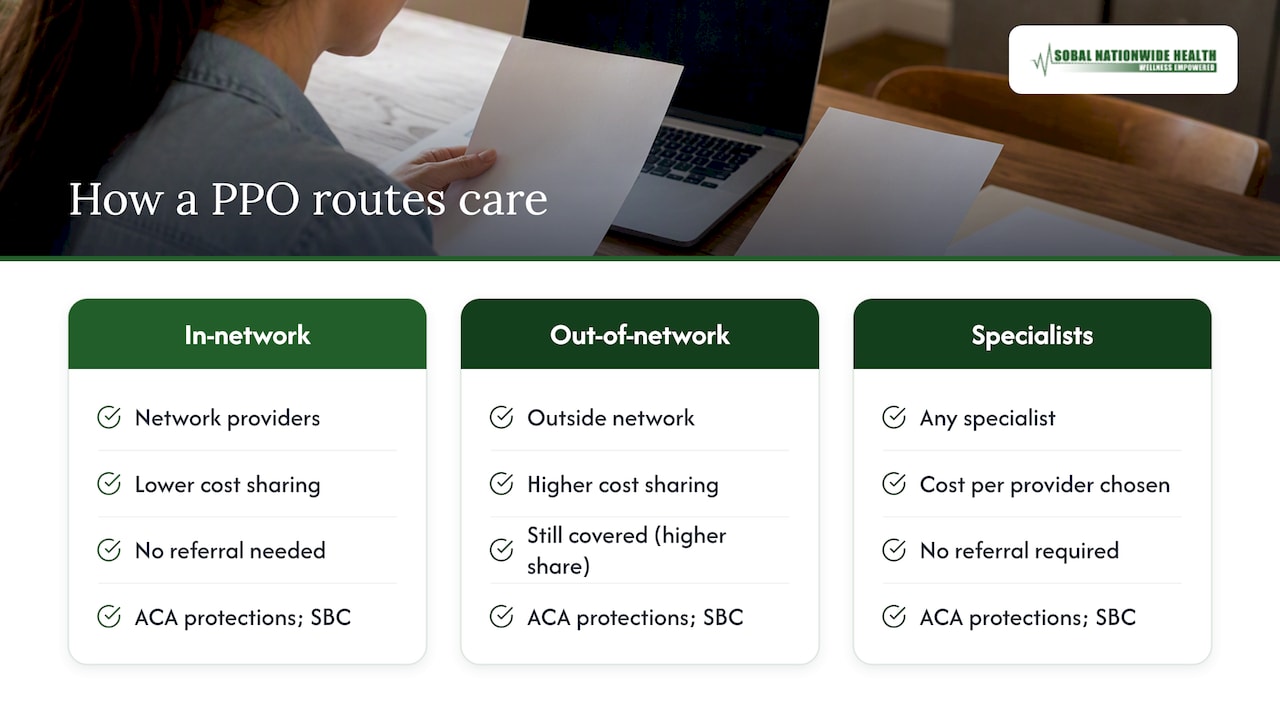
HealthCare.gov describes PPOs as one of the main plan types offered on the Marketplace, and when sold as comprehensive coverage, a PPO comes with a Summary of Benefits and Coverage document and the consumer protections built into ACA-compliant plans, including coverage of essential health benefits like hospitalization, maternity care, and prescription drugs.
Key differences and consumer protections to watch
The gap between these two plan types shows up most clearly when something actually goes wrong. A PPO covers essential health benefits as defined by the ACA: hospitalization, emergency care, prescription drugs, and more. A fixed indemnity plan covers only the events named in the policy, paying a flat amount whether your bill is modest or massive.
- Cost mechanics differ at the root. With a PPO, you pay a premium, then a deductible, then coinsurance until you hit your out-of-pocket maximum. With indemnity, you pay a (usually lower) premium and collect a fixed payout, with everything beyond that coming from your own pocket.
- Balance billing protections often do not apply to indemnity. No Surprises Act protections and other billing safeguards generally attach to comprehensive coverage, and fixed indemnity excepted benefits may fall outside that umbrella.
- Regulators have pushed back on confusing marketing. Recent federal rulemaking targets plans marketed in ways that blur the line between limited-benefit products and comprehensive insurance, requiring clearer consumer notices.
Pro Tip: If a plan uses the phrase “PPO pricing” or “PPO network” but cannot produce a Summary of Benefits and Coverage, ask directly whether it is an ACA-compliant plan or an excepted benefit before you sign anything.
When does each plan type actually make sense?
Neither plan type is universally right, so it helps to think in terms of fit rather than winners.
- Choose a PPO as your primary plan if you want predictable coverage for ongoing care, access to a broad network, and protection against catastrophic costs.
- Consider indemnity as a supplement if you already have comprehensive coverage and want extra cash on hand for a specific risk, like a hospital stay that comes with incidental costs that insurance does not cover.
- Be cautious with indemnity as your only plan if you have a chronic condition, expect ongoing specialist care, or cannot absorb a large bill beyond the fixed payout.
- Watch for premium savings that hide coverage gaps: a lower monthly bill on an indemnity plan often means a much larger bill later if you end up hospitalized.
How to compare plans before you enroll
A little homework before you sign up saves you from an unpleasant surprise later.
- Request the Summary of Benefits and Coverage (SBC) for any plan you are seriously considering, and confirm it states ACA-compliant status.
- Ask directly whether the plan is a fixed indemnity or other excepted benefit, and whether you have received the required consumer notice explaining what it does not cover.
- Check the provider network and ask specifically whether balance-billing protections apply to your care.
- Verify the agent and insurer are licensed through your state Department of Insurance before you pay a premium.
- Run a real scenario: compare a plan’s fixed payout for a hospitalization against typical provider charges for that same event, so you can see your actual exposure in dollars.
Pro Tip: Treat the absence of an SBC as a warning sign. A plan that cannot or will not produce one is telling you something about what it actually covers.
For a deeper look at how PPOs stack up against other plan structures, our comparison of plan types walks through the tradeoffs in more detail, and our guide on factors to weigh when comparing coverage covers the documents worth requesting before you commit.
How Sobal Health helps you choose between indemnity and PPO
We work with self-employed individuals, families, and small businesses, helping you read an SBC, confirm whether a plan is ACA-compliant, and model what a fixed indemnity payout might leave you owing. We also provide access to private, medically underwritten plans not sold on the public marketplace, reviewed individually so you can make informed choices.
This article was written by Bernie S.
A broker’s honest take on indemnity versus PPO
The marketing around fixed indemnity plans leans hard on the word “affordable,” and that word is doing a lot of work to hide what you are actually buying. A PPO is not flashy, but it is built to absorb the kind of costs that can wreck a family’s finances in a single bad month. My recommendation is simple: use a PPO as your primary coverage, and if indemnity has a place at all, it is as a supplement, never a replacement. Start by comparing SBCs side by side, then talk to a licensed broker before you commit to anything.
— Bernie S
Get a plan review before you commit to either option
Choosing between indemnity and PPO coverage gets a lot easier with someone who reviews insurance contracts for a living sitting next to you. We provide personalized advisory services including access to private medically underwritten plans not available through the public marketplace, helping you explore options beyond limited indemnity products and standard plans.

Our team reviews your current coverage, walks through your SBC line by line, and helps you understand exactly what a PPO or a fixed indemnity product would pay versus what you would owe.
- Personal & family plans: coverage built around your household’s actual needs, not a generic template.
- Medically underwritten options: private plans that can offer real savings for applicants who qualify, often not visible through standard marketplace searches.
- Enrollment support: we walk you through the paperwork and consumer notices so you know exactly what you are signing.
Availability depends on your state, since Sobal Health currently serves 31 states. Visit Sobal Health to request a free plan review and see what options are available where you live.
FAQ
What is the difference between PPO and indemnity?
A PPO is a comprehensive, network-based plan that pays a percentage of your costs after a deductible and typically meets ACA standards, while indemnity pays a fixed cash amount for a specific event regardless of the actual bill. PPOs cover the broad range of essential health benefits; indemnity only covers what is named in the policy.
What is the disadvantage of indemnity health insurance?
The biggest disadvantage is the gap between the fixed payout and your real medical bill, which can leave you owing a large amount out of pocket after a hospitalization or major procedure. Indemnity plans are generally classified as excepted benefits, so they skip many of the protections built into comprehensive coverage.
What is one major drawback of indemnity plans?
One major drawback is the lack of billing protections: No Surprises Act safeguards and related protections often do not apply to care paid for under fixed indemnity coverage. That leaves you exposed to balance billing in situations where a comprehensive plan would shield you.
Do doctors prefer HMO or PPO?
This depends more on administrative simplicity than patient preference, since PPOs generally do not require referrals and let providers bill out-of-network patients directly, which some practices find easier to manage. Neither plan type is inherently preferred across the board, and the better fit depends on your own care needs and provider relationships.
Sources
- Healthcare
- Short-Term, Limited-Duration Insurance and Independent, Noncoordinated Excepted Benefits Coverage (CMS fact sheet)
- Biden-Harris administration protects consumers from low-quality coverage, limiting ‘junk’ health plans | CMS
