

A copay is a fixed dollar amount you pay for a service, like $20 for a doctor visit. Coinsurance is a percentage of the allowed charge, usually kicking in only after you’ve met your deductible. Copays make budgeting predictable; coinsurance ties your cost directly to how expensive the service turns out to be. Before choosing a plan, check the Summary of Benefits and Coverage (SBC) to see which one your care will trigger.
TL;DR:
- Copays are fixed amounts paid upfront, while coinsurance is a percentage of the service’s negotiated cost, affecting your expenses after the deductible is met.
- Some copays apply before the deductible is satisfied, whereas coinsurance almost always activates only after reaching the deductible, with exceptions varying by plan.
- Under typical plans, a hospital stay with 80/20 coinsurance can lead to thousands of dollars in out-of-pocket costs once the deductible is reached, approaching the maximum limits.
- Lower premium plans usually involve higher copays and coinsurance, making utilization patterns crucial in selecting the most cost-effective option.
- Personalized cost modeling based on individual healthcare usage, provider charges, and plan details yields more accurate cost estimates than choosing plans solely by premium or generic assumptions.
Table of Contents
- Copay vs Coinsurance: Definitions and When Each Applies
- Worked Examples: How Much You Actually Pay
- How Cost-Sharing Choices Affect Your Premium and Budget
- Deductibles and Out-of-Pocket Maximums: How the Pieces Connect
- Practical Checklist: What to Compare Before You Enroll
- Why Personalized Cost Modeling Beats Guessing
- What Actually Drives Your Health Costs? A Broker’s Take
- Get a Personalized Plan Comparison From Sobal Nationwide Health
- Sources
- FAQ
Copay vs Coinsurance: Definitions and When Each Applies
Think of a copay as a toll booth. You pay the same flat fee every time, regardless of what happens after you’re through. A $20 copay for a primary care visit is $20 whether the doctor spends five minutes or forty-five with you.
Coinsurance works differently. It’s your share of the bill, expressed as a percentage of the allowed amount your insurer negotiates with the provider. If your plan sets coinsurance at 20%, you owe 20% of whatever that visit or procedure costs under your plan’s negotiated rate, and your insurer typically doesn’t apply this until you’ve hit your deductible, as Healthcare explains.
Here’s where it gets tricky: timing varies by plan.
- Some copays apply before your deductible kicks in at all, like the routine urgent care copay many plans charge from day one.
- Others don’t apply until after the deductible is met, more like a reduced-rate cost share.
- Coinsurance almost always waits until your deductible is satisfied, per CMS guidance on health insurance terms.
- A single visit can involve both a copay and coinsurance depending on how the plan is built, according to Optum’s breakdown of cost sharing.
There’s no substitute for reading your own SBC. Plan documents spell out exactly which rule applies to which service, and generic assumptions will lead you astray more often than not.
Worked Examples: How Much You Actually Pay
Numbers make this real. Say your plan’s allowed amount for a primary care visit is $100.
- Copay plan: You pay a flat $20. Done. The insurer covers the rest regardless of what the visit actually cost.
- Coinsurance plan (deductible met): You pay 20% of $100, or $20. Same out-of-pocket number here, but only because you already cleared your deductible.
- Coinsurance plan (deductible NOT met): You pay the full $100 allowed amount, since coinsurance doesn’t apply until the deductible is satisfied, as CMS notes.
A specialist visit follows the same logic but with higher stakes, since specialist allowed amounts run higher and many plans set specialist copays at $40 to $75. If your deductible isn’t met, that “coinsurance visit” can suddenly cost hundreds more than the copay-plan equivalent.
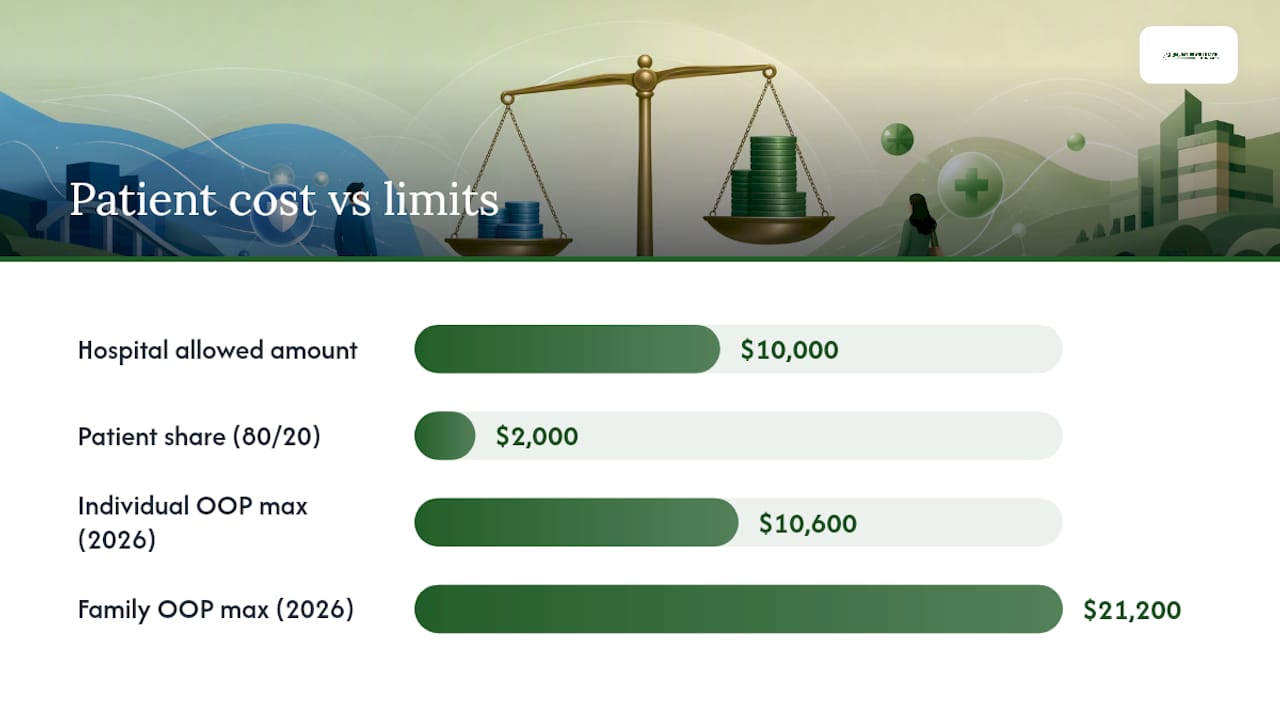
Now scale it up. A $10,000 hospital stay under an 80/20 coinsurance split, which MoneyGeek identifies as the most common ACA arrangement, leaves you owing $2,000 once your deductible is met. That’s where the out-of-pocket maximum becomes your safety net.
Statistic to know: For 2026, CMS caps the individual out-of-pocket maximum at $10,600 and the family maximum at $21,200. Once your combined deductible, copays, and coinsurance hit that ceiling, your plan covers 100% of allowed costs for the rest of the year.
How Cost-Sharing Choices Affect Your Premium and Budget
Lower premiums almost always come paired with higher copays and coinsurance. It’s not a coincidence. Insurers price plans so that if they’re taking less of your money every month, they’re building in more cost-sharing when you actually use care, a tradeoff Healthcare.
That inverse relationship is the whole game when picking a plan. Your job is figuring out which side of that seesaw fits your life.
- Frequent care users (chronic conditions, regular prescriptions, kids with pediatrician visits) generally do better with copay-heavy plans. Predictable costs beat percentage math when you’re at the doctor’s office monthly.
- Rare but expensive-event planners (generally healthy, want protection against a surprise surgery or hospitalization) often do better prioritizing a lower out-of-pocket maximum and accepting more coinsurance exposure, since utilization patterns should drive the mix, not just sticker price.
- HMO plans commonly lean on copays for primary and specialist visits.
- PPO and EPO plans frequently blend copays for routine visits with coinsurance for hospital and specialty care.
To estimate your real annual cost, add your premium total to your expected copays or coinsurance dollars, based on how much care you actually use, not how much you hope to use.
Pro Tip: Pull your prescriptions, last year’s specialist visits, and any planned procedures before you compare plans. Guessing at “probably won’t need much care” is how people end up underinsured for the year they actually do.
Deductibles and Out-of-Pocket Maximums: How the Pieces Connect
Your deductible is the amount you pay out of pocket before your plan starts sharing costs through coinsurance. Coinsurance typically doesn’t activate until that number is hit, though plan language varies enough that you shouldn’t assume, according to Optum’s guidance on reviewing plan terms.
Copays are the wild card. Some count toward your deductible, some don’t, and some apply even after the deductible is satisfied, layered on top of coinsurance for the same visit.
- A $2,000 deductible plan might let a $30 primary care copay apply immediately, with no deductible requirement at all.
- The same plan could require the full deductible met before a $500 MRI triggers 20% coinsurance instead of the full bill.
- Once your combined spending, deductible, copays, and coinsurance together, reaches your out-of-pocket maximum, your insurer picks up 100% of allowed costs for the remainder of the plan year.
Confirm every one of these rules in your SBC before assuming how a specific treatment will be billed.
Practical Checklist: What to Compare Before You Enroll
Comparing plans gets a lot less confusing once you know exactly what numbers to pull and line up side by side.
- Estimate your expected visits for the year: primary care, specialists, therapy, prescriptions.
- Note the deductible for each plan you’re considering and whether it’s individual or family.
- List copay amounts per visit type and per prescription tier.
- Check coinsurance percentages for hospital stays, surgery, and imaging.
- Compare out-of-pocket maximums, since this is your real worst-case number.
- Verify network allowed amounts, since pricing variation across providers can make coinsurance exposure unpredictable.
- Review pharmacy tiers, since prescription costs often follow separate copay or coinsurance rules entirely.
Once you have those seven numbers, a simple formula gets you close: annual premium, plus expected copays, plus expected coinsurance dollars based on likely billed amounts. If the math gets complicated fast, that’s usually the moment to bring in a broker for cost modeling across Florida plans rather than guessing.
Why Personalized Cost Modeling Beats Guessing
Most people pick a plan based on the premium number and hope the rest works out. That’s backwards. The premium is the smallest piece of information you have; your actual usage pattern is what determines whether a copay-heavy or coinsurance-heavy design saves you money.
At Sobal Nationwide Health, we work with self-employed individuals, families, and small businesses across 31 states, and the plans that save clients the most money are rarely the ones with the lowest headline premium. They’re the ones matched to how a person actually uses care, which is why personalized cost modeling matters more than any single number on a brochure.
What Actually Drives Your Health Costs? A Broker’s Take
The conventional wisdom says coinsurance is riskier and copays are safer. That’s only half true, and treating it as gospel leads people to overpay.
Coinsurance isn’t inherently bad. For someone who rarely sees a doctor and mainly wants protection against a catastrophic event, a coinsurance-heavy plan with a lower premium and a reasonable out-of-pocket maximum often beats a copay-rich plan that charges more every month for benefits they’ll barely touch. The mistake isn’t choosing coinsurance. It’s choosing it blind, without checking the out-of-pocket maximum or the allowed amounts your specific providers actually charge.
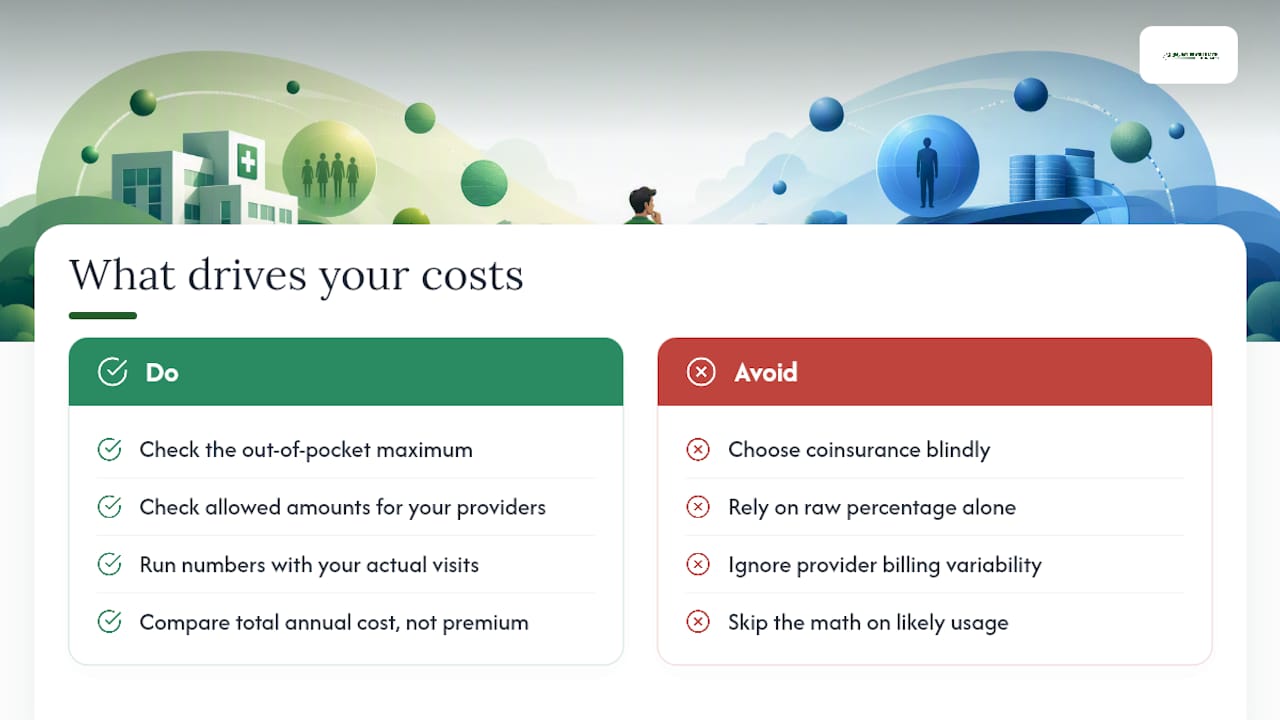
What people consistently underestimate is how much provider billing behavior shapes coinsurance exposure. That variability rarely shows up in plan brochures, and it’s exactly why raw percentages on a benefits summary don’t tell the whole story.
The real skill isn’t picking copay or coinsurance in the abstract. It’s running your own numbers, actual visit counts, actual prescriptions, actual likely procedures, against what each plan design would cost you specifically. Most people never do this math. The ones who do almost always end up somewhere different than where the lowest premium would have put them.
— Bernie S
Get a Personalized Plan Comparison From Sobal Nationwide Health
Once you understand copays and coinsurance, the next question is which mix actually fits your budget and your health needs. That’s not a spreadsheet exercise most people enjoy doing alone.

We provide access to private, medically underwritten plans not available on the public marketplace, alongside ACA marketplace options, reviewed one-on-one with a licensed broker who models your expected costs before you enroll, not after you’re stuck with a bad match. We offer Personal & Family Insurance with no sales pressure, English or Spanish support, and coverage across 31 states, plus medically underwritten plan options for people who want to compare private coverage against standard marketplace plans. If you’re a small business owner instead, our business health insurance guidance covers group plan design and broker fees upfront, no surprises. Request a free plan review today and see the actual numbers before you commit to a year of coverage.
Sources
This article draws on federal glossaries and consumer research, including HealthCare.gov, CMS, MoneyGeek, Optum Now, and MedlinePlus, along with insight from Chameleon’s guide to common copay misconceptions.
This article is general information, not a substitute for advice from a qualified financial advisor. Consult a qualified financial professional about your own circumstances before acting on anything here.
- Healthcare
- CMS — Health insurance terms / coinsurance & copayment
- What Is Coinsurance in Health Insurance? | MoneyGeek (2026)
- Optum Now — coinsurance vs copay
FAQ
Does a copay count toward my deductible?
It depends on the plan. Some copays apply before your deductible is met and don’t count toward it, while others count toward both the deductible and the out-of-pocket maximum, so your SBC is the only reliable source for your specific plan.
Is coinsurance always cheaper than a copay?
Not necessarily. Coinsurance is a percentage of the allowed amount, so a routine visit can cost you more under coinsurance than a fixed copay, especially before your deductible is met, per CMS.
What happens once I hit my out-of-pocket maximum?
Your insurer covers 100% of allowed costs for the rest of the plan year. For 2026, the individual cap is $10,600 and the family cap is $21,200 under CMS rules.
Can a single doctor visit have both a copay and coinsurance?
Yes. Some plans charge a flat copay for the visit itself, then apply coinsurance separately to related services like labs or imaging, a combination Optum confirms is common in plan design.
How much does Sobal Nationwide Health charge for a plan review?
Sobal Nationwide Health’s broker services don’t carry a published fee for personal plan reviews. Current details are available directly on the Sobal Nationwide Health site.
