

Agency plans, COBRA, Marketplace coverage under a Special Enrollment Period, and private portable or medically underwritten plans are the realistic routes to health insurance for travel nurses. For most of you, the smartest move is prioritizing portability and timing over the lowest sticker price, since missing a deadline costs more than a slightly higher premium. You generally have 60 days after losing job based coverage to act, and we can walk you through the private and medically underwritten options if agency coverage will not travel with you.
TL;DR:
- Marketplace enrollment begins with the exact date agency coverage ends; enroll within 60 days, and coverage generally starts on the first day of the following month.
- COBRA preserves your plan and network and may be retroactive if elected and paid on time, but full premiums make it better for brief gaps.
- Estimate annual income across all assignments, not peak contract pay; Marketplace subsidy eligibility uses that projection, and you can update the estimate midyear.
- Medically underwritten plans can offer options to healthy nurses, but carriers review health history; Marketplace plans cannot deny coverage or raise prices for preexisting conditions.
- Ask whether emergency care outside the network receives in network rates, and check urgent care access near assignments because local networks may limit coverage.
Table of Contents
- 1. Agency-provided health insurance: what to expect
- 2. Marketplace (ACA) plans and Special Enrollment Periods: deadlines, subsidies, and effective dates
- 3. COBRA: continuity and cost, and when it makes sense for travel nurses
- 4. Private portable and medically underwritten plans: coverage that follows you between contracts
- 5. Supplemental coverage and short-term gap products travel nurses commonly use
- 6. A decision checklist for when your coverage is ending
- 7. What travel nurses actually need from a health plan
- 8. State rules that follow you from assignment to assignment
- 9. Using an HSA or FSA while working travel contracts
- 10. How pre-existing conditions affect your options
- 11. Emergency and urgent care coverage away from your home base
- 12. Enrolling or transferring coverage between assignments
- A broker’s take on avoiding coverage gaps
- How Sobal Nationwide Health helps travel nurses stay covered between contracts
- FAQ
- Sources
1. Agency-provided health insurance: what to expect
Most agency plans activate once you start active assignment payroll and stop the day your contract ends or pauses, which is the detail that catches travel nurses off guard between gigs. Coverage during the gap between contracts is rarely automatic, even with the same agency, so you will want a backup plan ready before your last clocked shift.
Agency group plans tend to share a few traits worth knowing upfront:
- Eligibility is usually tied to actively working a set minimum of hours per week on assignment.
- Networks are often regional or built around a national PPO, which can limit choice in rural placement areas.
- Coverage typically ends on your last day worked or shortly after, not on a fixed monthly date.
Keep agency coverage when your contracts run back to back with little downtime. Start planning an alternative the moment you know a gap of more than a few weeks is coming, since that is when Marketplace or private options start making more sense.
2. Marketplace (ACA) plans and Special Enrollment Periods: deadlines, subsidies, and effective dates
Losing job based coverage, including an agency plan ending between assignments, triggers a Marketplace Special Enrollment Period, giving you 60 days to enroll. Selecting a plan within that window generally sets your effective date to the first day of the following month after your previous coverage ended, according to HealthCare.gov.
A few steps make this process manageable:
- Mark the exact date your agency coverage ends on a calendar, since the 60 day clock starts there.
- Estimate your annual income across all assignments for the year, not just your current contract rate.
- Apply through the Marketplace before the deadline and select a plan, which locks in the next-month effective date.
- Compare at least two plans on network reach, HSA compatibility, and your premium after any advance premium tax credit.
Your subsidy eligibility hinges on projected annual income, and travel nurse pay often swings between high per diem stretches and slower months. Building a conservative estimate that averages your likely weeks worked across the year keeps your subsidy more predictable than guessing based on your busiest contract. Our guide on changing health insurance outside open enrollment walks through this estimate in more detail, and you can check your situation against the SEP eligibility criteria before you apply.
Pro Tip: Round your income estimate down slightly rather than up. You can update it mid-year if your assignments pay more than expected, and it is easier to true up a credit than to owe one back.
3. COBRA: continuity and cost, and when it makes sense for travel nurses
COBRA lets you keep your agency’s group plan temporarily after your assignment or eligibility ends, and you typically have up to 60 days to elect it, according to the Department of Labor’s COBRA guide. Coverage is commonly available for a year and a half, with limited extensions in specific circumstances.
COBRA keeps your exact plan and network, with no new deductible to satisfy, but you take on the full premium cost. CMS guidance notes that many people whose employers will not subsidize COBRA premiums may find lower-cost options through the Marketplace instead.
A few things to know before you elect:
- Your employer’s premium contribution usually ends, so you pay the full cost plus a small administrative charge.
- Election can be made retroactive to your last day of active coverage if you elect and pay within the required windows, per the Department of Labor.
- COBRA works best as a short bridge, such as covering the handful of weeks before Marketplace coverage starts, rather than a long-term plan.
4. Private portable and medically underwritten plans: coverage that follows you between contracts
For travel nurses who move frequently, a plan tied to one employer or one state network can be the wrong design entirely. Private portable plans, including nationwide PPOs, are built to work the same way whether you are on assignment in one state or starting a new contract three states away.
Medically underwritten individual plans are a separate category from Marketplace plans: carriers review your health history to set pricing and availability, which can open up plan designs and premiums not listed on the public exchange. Fixed-indemnity and supplemental plans round out this group, paying set cash amounts for specific services rather than working off a deductible and coinsurance structure.
What this category typically includes:
- Nationwide PPO networks that do not reset when you cross a state line for a new assignment.
- Medically underwritten plans priced and designed around your individual health profile.
- Fixed-indemnity add-ons that pay fixed amounts for hospital stays, doctor visits, or procedures.
We work with travel nurses to match them with portable and medically underwritten coverage, with brokers available in English and Spanish and no sales pressure attached to the advice. Some clients have reported monthly savings after switching to a private option that better fit their situation.
Pro Tip: Ask any private plan point-blank whether it covers out-of-network emergency care at full in-network rates. That answer matters more for travel nurses than almost any other plan feature.
5. Supplemental coverage and short-term gap products travel nurses commonly use
Dental, vision, accident, and fixed-indemnity plans fill in around a major medical plan rather than replacing one. They are worth adding when a short uninsured stretch or a high-deductible plan leaves you exposed to smaller, predictable costs.
- Dental and vision plans cover routine and preventive care that most major medical plans exclude.
- Accident and fixed-indemnity plans pay cash benefits for injuries or hospital stays, cushioning out-of-pocket costs during a coverage gap.
- If you are enrolled in a high-deductible health plan, contributions to an HSA stay tax-advantaged regardless of which state you are working in that month.
6. A decision checklist for when your coverage is ending
Work through this in order the moment you know your current coverage has an end date:
- Confirm your exact last day of employer or agency coverage in writing.
- Mark your 60 day SEP deadline and your COBRA election deadline on the same calendar.
- Estimate your annual income conservatively across all expected assignments for the year.
- Compare total monthly cost, not just premium, including deductible and out-of-pocket maximum.
- Check network and portability for each option against your next few likely assignment locations.
- Pick your path and submit your first premium payment before the deadline.
Gather your termination date, recent pay stubs or contract rate sheets, your current plan’s name, and its Summary Plan Description before you start comparing options. Having these on hand turns a confusing afternoon into a 20 minute task.
Pro Tip: If your next contract starts within three weeks, lean COBRA for the bridge. If it is longer than that, the Marketplace SEP usually wins on cost.
A simple if/then: if your gap is under a month, COBRA’s immediacy often outweighs its cost. If your gap runs longer or your income qualifies for a subsidy, Marketplace coverage under the SEP is usually the better value. If you want coverage that follows you regardless of contract length or location, a private portable plan removes the guesswork for every future assignment, not just this one.
7. What travel nurses actually need from a health plan
Travel nurses face a specific mix of medical risk that a standard employer plan was not necessarily designed around. Frequent exposure to patients with infectious illness, higher rates of musculoskeletal strain from physically demanding shifts, and long stretches away from an established primary care provider all shape what a good plan needs to cover.
A plan that leans heavily on a narrow local network can leave you stranded mid-contract in a new city, unable to see anyone in-network without paying full price. Broad network access, or a nationwide PPO design, matters more for this group than for someone who stays in one metro area year-round.
Preventive care access matters just as much. Skipping a yearly physical or a dental cleaning because you cannot find an in-network provider in your current assignment city adds up over several moves a year. A plan built for portability keeps that routine care from falling through the cracks.
8. State rules that follow you from assignment to assignment
Health insurance regulation in the United States is set largely at the state level, which means plan availability, required benefits, and even pricing rules can shift the moment you start a contract in a new state. A plan sold in one state is not automatically available, or priced the same, in the next.
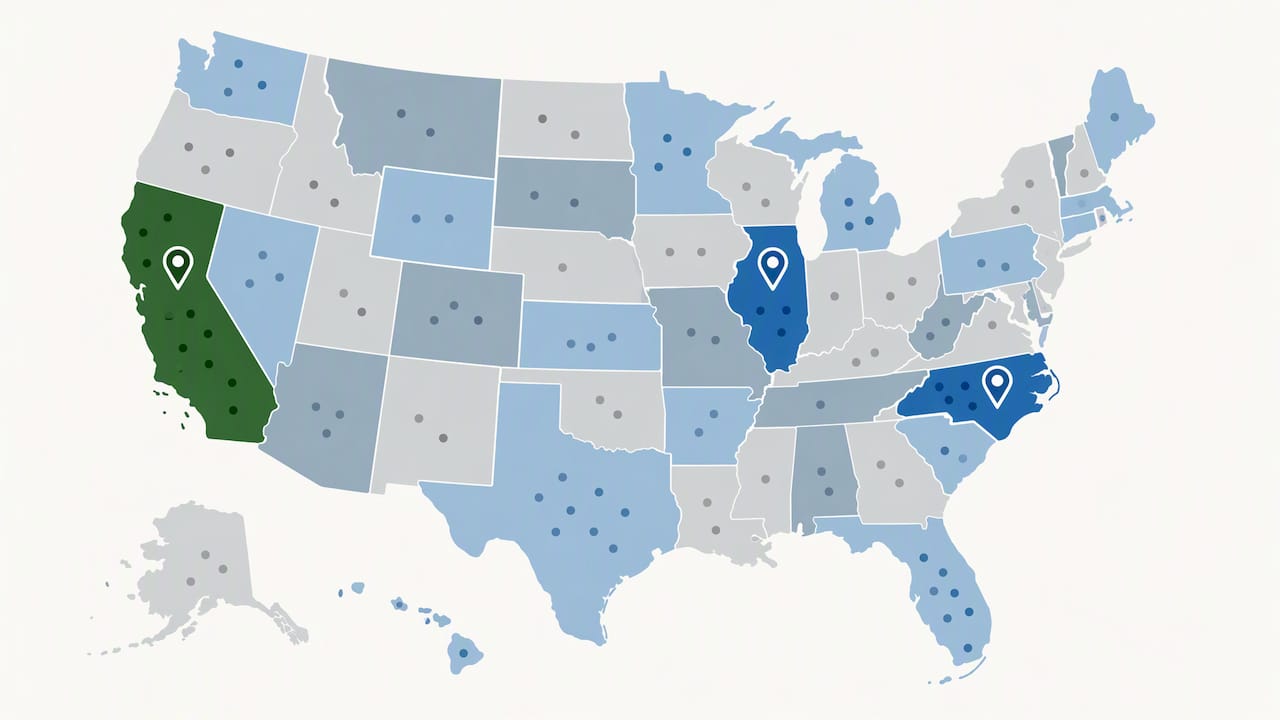
This is one reason agency plans and Marketplace plans both tend to define your home state based on your permanent residence, not your current assignment location, for enrollment purposes. Your coverage generally stays tied to your home state address even while you work elsewhere, though your plan’s network may not extend fully into your assignment location.
A private portable plan sidesteps much of this complexity by design, since it is structured to work consistently across the states where it is offered rather than resetting with each new contract.
9. Using an HSA or FSA while working travel contracts
If you are enrolled in a high-deductible health plan, whether through an agency, the Marketplace, or a private carrier, you can typically still contribute to a Health Savings Account and use it the same way regardless of which state you are working in that month. HSA funds roll over year to year and stay with you even if you change plans or agencies, which fits the travel nursing schedule better than a use-it-or-lose-it account.
A Flexible Spending Account works differently: it is tied to a specific employer’s plan year and generally does not transfer if you leave that employer, which matters if you switch agencies mid-year. If your agency offers an FSA, plan your contributions around your known contract length rather than a full calendar year.
Either account can be used for dental and vision costs not covered by your main plan, which is worth factoring in if you are also carrying a supplemental dental or vision policy.
10. How pre-existing conditions affect your options
Marketplace plans cannot deny you coverage or charge you more based on a pre-existing condition, and this protection applies regardless of your health history. Private medically underwritten plans work differently: carriers review your health history as part of pricing and eligibility, which can mean a lower premium if you are generally healthy, or limited availability if you have a significant ongoing condition.
This is exactly why the two categories exist side by side rather than one replacing the other. A medically underwritten plan can be a strong value for a healthy travel nurse who wants a broader network or lower premium than the Marketplace offers, while a Marketplace plan remains the more predictable choice if you have an ongoing condition that could affect underwritten pricing. Talking through your specific health history with a broker before choosing either route saves you from an unpleasant surprise at enrollment.
11. Emergency and urgent care coverage away from your home base
An emergency room visit is treated as emergency care under most plans regardless of whether the hospital is in-network, which protects you if something serious happens mid-contract in an unfamiliar city. Urgent care is a different story: a narrow network plan may only pay full benefits at an in-network urgent care clinic, and finding one in a brand-new assignment city under time pressure is its own challenge.
This is where a nationwide PPO design earns its cost. Broader network access means more urgent care options show up as in-network no matter where your current contract has placed you, instead of forcing an unnecessary emergency room visit just to stay covered.
12. Enrolling or transferring coverage between assignments
Switching into a new plan, whether Marketplace, COBRA, or a private option, generally requires the same handful of documents: proof of your coverage loss date, your Social Security number, your estimated annual income, and your current address. If you are applying for a medically underwritten plan, expect a short health history questionnaire as part of the application.
Transferring from one agency’s plan to another, or from an agency plan to a private policy, does not require canceling the old plan yourself in most cases; it typically ends automatically when your assignment does. Our Special Enrollment Period guide outlines exactly which documents to have ready before you start an application, which keeps the process to one sitting instead of several follow-up calls.
A broker’s take on avoiding coverage gaps
The biggest mistake we see is travel nurses treating coverage as something to sort out after the contract ends. By then the SEP clock is already running and options narrow fast. Write down your coverage end date the day you sign a new contract, estimate your income conservatively, and favor a plan that travels with you over one that is simply cheap this month.
— Bernie S
How Sobal Nationwide Health helps travel nurses stay covered between contracts
We specialize in matching self-employed workers, including travel nurses, with coverage that does not depend on where your next contract lands. We give you direct access to private medically underwritten plans you will not find on the public Marketplace, alongside standard Marketplace and supplemental options when those fit better. Every conversation is one-on-one, with brokers available in English or Spanish, focused on explaining your actual options rather than pushing a sale. Some clients have cut their monthly premium after switching from a plan that no longer fit their schedule. If your current coverage has an end date on the calendar, start a free policy review with our team before that deadline arrives.
This article is general information, not a substitute for advice from a qualified doctor. Consult a qualified healthcare professional about your own circumstances before acting on anything here.
FAQ
What is the best health insurance for travel nurses?
There is no single best plan; the right choice depends on how long your gap between contracts is and your income for the year. A short gap often favors COBRA for continuity, a longer gap usually favors a Marketplace plan under your Special Enrollment Period, and frequent moves between states often favor a private portable plan.
How do travel nurses get health insurance?
Travel nurses typically get coverage through an agency’s group plan while on assignment, then bridge gaps with COBRA, a Marketplace plan under a Special Enrollment Period, or a private portable plan. Losing agency coverage opens a 60 day window to enroll in a Marketplace plan, with coverage generally starting the first of the following month if you enroll in time.
What is the 12 month rule for travel nurses?
The 12 month rule comes from IRS Publication 463 and determines whether a work assignment counts as temporary for tax purposes. An assignment expected to last, or that actually lasts, more than 12 months at one location generally makes that location your tax home, which affects which travel expenses remain deductible.
Is travel nursing still worth it in 2026?
That depends on your priorities around pay, flexibility, and how much effort you want to put into managing benefits between contracts. The financial and lifestyle trade-offs are personal, but the coverage gap problem itself is manageable with a clear SEP and COBRA timeline and, where it fits, a portable plan that does not reset with every new assignment.
Sources
- Healthcare
- An employee’s guide to health benefits under COBRA | U.S. Department of Labor
- Understanding COBRA job aid | CMS
- Publication 463 (Travel, Gift, and Car Expenses) | IRS
