





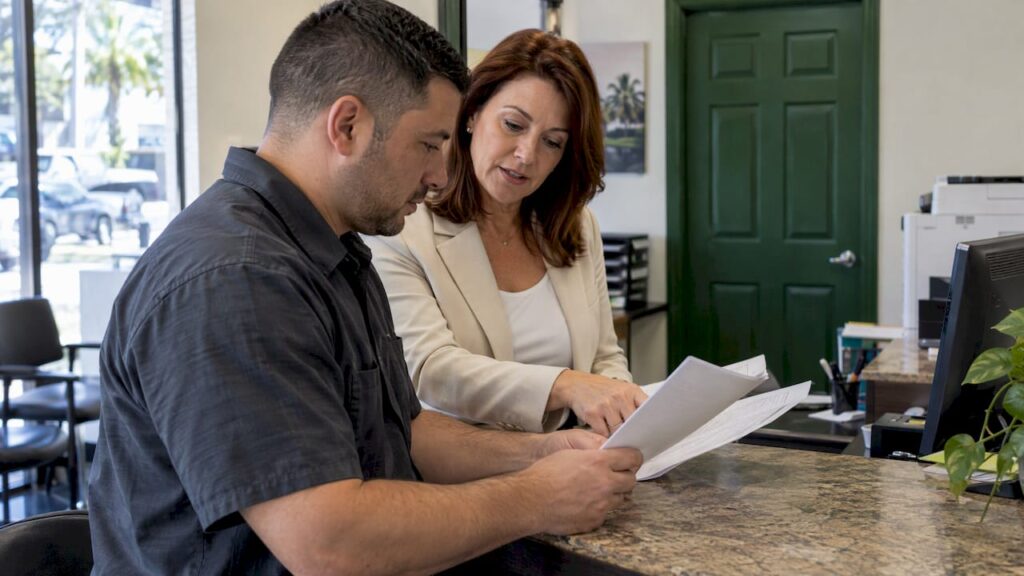
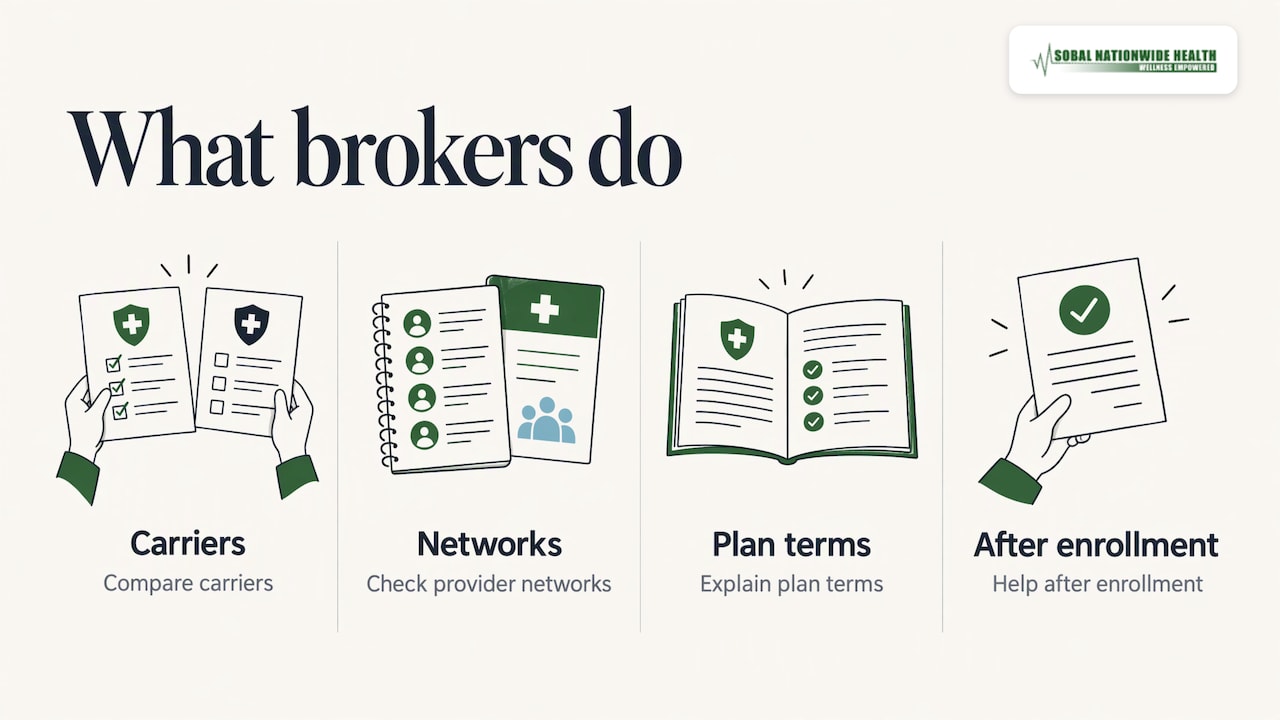
In Florida, a broker can compare several carriers, check that your doctors are in network and help you after you enroll. The premium is the same as buying direct, because the carrier pays the broker.
That makes the real question one of effort and fit, not price. If you are self-employed, run a small business or cover a family and want private PPO-style coverage, the extra help usually costs you nothing. This guide shows what each route involves so you can pick the one that suits you.
TL;DR
- A broker is paid by the insurance carrier, so you do not pay extra for their help, and the plan price is the same as going direct.
- One carrier’s website shows you that carrier’s plans. A broker can lay out several carriers side by side and check networks for you.
- Help does not end at enrollment. A broker can walk you through claims questions, renewals and plan changes.
- Buying direct is fine in some situations, and we list them honestly below.
- Before you sign with anyone, confirm their Florida license with the state.
Table of Contents
- What buying direct actually looks like
- What a Florida broker does for you
- Is it cheaper to buy direct? Why the premium is the same
- When buying direct is fine
- Broker or direct: a side-by-side view
- How to check a Florida broker’s license
- Who gets the most from a broker
- A broker’s checklist for any Florida plan
- Our perspective
- Talk to a licensed Florida broker
- FAQ
- Sources
What buying direct actually looks like
Buying direct means you pick one insurer, go to its website or call its sales line, fill in the application and pick from that insurer’s plans. Many people start this way because it feels simple. For some, it is.
Here is what you take on when you go direct:
- You choose the carrier first. You usually decide who to apply with before you see how other carriers compare.
- You read the plan documents yourself. Premium, deductible, copays, coinsurance and out-of-pocket maximum all sit in different places, and every insurer words them a little differently.
- You check the network yourself. You need to confirm your doctors, your hospital and your pharmacy are in the plan you are about to buy.
- You handle problems alone. If a claim is denied or a bill looks wrong, you are on the phone with the insurer’s service line.
I think of the premium as the price of getting in the door. What matters just as much is what happens once you are inside: the deductible you pay before the plan starts sharing costs, and the out-of-pocket maximum, which works like a financial safety net. The Florida Department of Financial Services (DFS) says premium is only one factor and that you should also compare cost-sharing, the provider network and the drug list. That is a lot to line up on your own when each carrier shows you only its own plans.
What a Florida broker does for you
A broker is a licensed professional who helps you choose and enroll in a plan. HealthCare.gov’s glossary explains that agents may work for a single insurer while brokers may represent several companies. It also says you won’t pay anything additional when you enroll with an agent or broker, and that they must be licensed by the state.
In practice, working with one of our health insurance brokers covers four jobs.
1. Comparing several carriers
A broker can put plans from more than one carrier next to each other, so you compare like with like. For self-employed people and families who want a PPO, which lets you see doctors and specialists without a referral, that comparison is often where the best fit shows up.
2. Checking the network
A plan is only as good as the doctors and hospitals that take it. A broker can check whether your primary care doctor, your child’s pediatrician or your preferred hospital is in the network before you commit. If you want nationwide doctor choice because you travel for work, this check matters even more.
3. Explaining the fine print
The terms are where most people get stuck: deductible, copay, coinsurance, out-of-pocket maximum. A good broker explains them in plain English and shows how they work together on a real example, not just in a definition.
4. Staying with you after enrollment
This is the part people undervalue. Questions come up after the card arrives: how to use a plan, what to do when a claim is denied, what to do when a doctor leaves the network, or how to change coverage when your life changes. A broker is someone you can call. Research on broker involvement describes this kind of help as easing the paperwork, learning and compliance burdens that consumers otherwise carry alone.
Is it cheaper to buy direct? Why the premium is the same
No. The premium for a given plan is the same whether you buy it direct or through a broker.
The reason is how brokers are paid. They earn a commission from the insurance carrier when you enroll, and that commission is already built into the plan’s price. A peer-reviewed commentary describes broker commissions as usually running $15 to $30 per member per month and as being factored into premiums. Skipping the broker does not remove that cost from the premium. It only removes the person who could have helped you.
It works like buying a plane ticket. The airline’s fare is the same whether you book through its site or through an agent who is paid by the airline. With insurance, you simply get the agent’s time and knowledge at no added charge to you.
A few practical points follow from that:
- Compare plans by total yearly cost, not just the monthly premium. A low premium with a high deductible can cost more over a year of real use.
- Ask any broker how they are paid. A transparent answer is a good sign.
- Ask whether they are licensed in Florida and which carriers they work with. You can check the license yourself, as the next section shows.
When buying direct is fine
We are brokers, and we still think buying direct is a reasonable choice in some situations. It tends to work when most of these are true:
- You already know the carrier you want. Maybe a friend or colleague has had a good experience, or you have used that carrier before.
- Your doctors are already confirmed. You have checked the exact plan’s network and your providers are in it.
- Your needs are simple. You are a single, healthy adult who rarely sees a doctor and just wants a straightforward plan.
- You are comfortable reading plan documents. You know what a deductible, coinsurance and an out-of-pocket maximum mean and can compare them yourself.
- You do not need ongoing help. You are happy to deal with the insurer’s service line if something goes wrong.
If that describes you, going direct will not cost you more in premium. It will cost you time and put the comparison work on you.
Buying direct gets harder when your situation has more moving parts. That includes a family with several doctors, a business owner choosing for employees, someone who travels and needs nationwide access, and anyone comparing plans from several carriers at once. In those cases the comparison and network checks are where a broker earns their place.
If you want a deeper look at the comparison itself, our guide to factors to consider when comparing health insurance in Florida walks through the criteria. Building your understanding of plan terms first also helps, and this overview of health insurance literacy is a good place to start.
Broker or direct: a side-by-side view
| What you need | Buying direct | Working with a broker |
|---|---|---|
| Premium for the same plan | Same | Same |
| Carriers you can compare | The one you choose | Several carriers side by side |
| Network check | You do it | Your broker checks your doctors and hospitals |
| Explaining deductibles and coinsurance | Plan documents and the insurer’s service line | One-on-one in plain English |
| Help after you enroll | Insurer’s customer service | A person you can call about claims, renewals and changes |
| Best suited to | Simple needs and a carrier already chosen | Families, self-employed people, small businesses and anyone comparing options |
How to check a Florida broker’s license
Before you share personal details with anyone, confirm that they are licensed. The Florida DFS Purchasing Insurance page tells consumers to make sure the company, broker or agent is licensed in Florida before signing a contract or writing a check. It notes that marketing insurance without a license is illegal in the state. You can verify through DFS records or call the DFS Consumer Helpline at 1-877-MY-FL-CFO (1-877-693-5236).
The same page notes that an agent may represent more than one company, and that some agents hold professional designations. A license number should be easy for any broker to give you. Ours is on every article we publish: Bernie Sobalvarro, licensed broker, NPN 19189235.
For more on choosing someone, see how to find a health insurance broker in Florida.
Who gets the most from a broker
The people we hear from most often have situations that are not one-size-fits-all:
- Self-employed people and 1099 contractors, including freelancers, gig workers, realtors and owner-operator truckers, who want a private PPO and need to balance monthly cost against the deductible.
- Small business owners with 2 to 30 employees who are deciding between individual coverage and a group plan. Our guide on what to look for in a small business health insurance plan in Florida covers the questions to ask.
- Families who want the same hospital and doctors for everyone, or who find a spouse’s employer family plan too expensive.
- People between jobs, including anyone leaving COBRA, the continuation coverage you can keep after leaving an employer plan.
- Young adults turning 26 who are leaving a parent’s plan.
- Spanish-speaking families and business owners who want to talk through the options in Spanish.
For these readers, our business and group coverage page and our personal and family coverage page show how we can help. You can also browse our free resources library.
A broker’s checklist for any Florida plan
Whether you go direct or with help, use the same checklist. It keeps you focused on what the plan will do for you, not just on what it costs to start.
- Write down your doctors, hospital and prescriptions. Confirm each is in the plan’s network and drug list.
- Look at the deductible and the out-of-pocket maximum. These tell you the most you could pay in a bad year.
- Check copays and coinsurance for the visits you actually make: primary care, specialists, urgent care.
- Ask about nationwide access if you travel for work or have family in other states.
- Read the summary of benefits. It is the short, standard-format document that lays out what the plan covers.
- Ask about underwriting. Some private plans review your health history when you apply, which is why they are called medically underwritten. Our guide on how medically underwritten insurance works explains who it fits.
- Confirm the license of whoever helps you.
When we sit down with clients, we run through this same list on a call. It takes much of the guesswork out. For a Florida-specific view of cost, see how to lower health insurance costs in Florida and how to find affordable health insurance in Florida.
Our perspective
I have worked with Florida’s self-employed people, families and small business owners for years. The same thing happens again and again. Someone spends a weekend on carrier websites, picks a low premium and then finds out in March that their doctor is out of network or their deductible is higher than they expected.
That is why we say the premium gets you in the door, but the plan is what you live with. The premium is the same with or without us, because the carrier pays the broker. So the real choice is whether you want someone to compare, check and explain before you buy, and to be there afterward.
At Sobal Health, we offer access to private, medically underwritten plans, including portable and nationwide PPO options. We talk with you one-on-one, in English or Spanish, and we focus on educating you, not on pressuring you. If you are healthy and want the freedom to see the doctors you choose, that conversation is usually the fastest way to a plan that fits.
We don’t promise any particular coverage or savings. We promise to explain your options clearly so you can decide.
Bernie S
Talk to a licensed Florida broker
Our team helps self-employed people, families and small business owners across Florida compare private plans. We cover medically underwritten health insurance, along with dental, vision, accident, critical illness and group options. We are licensed in 31 states, and you can reach us in English or Spanish.
If you are ready to see your options side by side, start with our personal and family insurance page. Business owners can go to our business health insurance page.
FAQ
Is it cheaper to get insurance direct or through a broker?
No. The premium for the same plan is the same either way. Carriers pay broker commissions, and those are already built into the plan’s price, so using a broker does not add a charge for you.
Can you get health insurance without a broker?
Yes. You can apply directly with an insurer in Florida. You will choose the carrier yourself, compare the plan details on your own and check your doctors against the network. This works best when your needs are simple.
Are there health insurance brokers in Florida?
Yes. Florida has many licensed brokers, and the state requires them to be licensed. Check the license through the Florida Department of Financial Services or call its Consumer Helpline at 1-877-693-5236 before you share personal information.
Does a broker help after I enroll?
A broker can be your point of contact after enrollment, for questions about how to use the plan, claims and renewals. That ongoing support is one of the main differences from buying direct, where you generally deal with the insurer’s service line.
What should I compare besides the premium?
Compare the deductible, the out-of-pocket maximum, copays and coinsurance, the provider network and the prescription drug list. Florida’s DFS advises looking at these alongside the premium, because the monthly price tells only part of the story.
Sources
- Agent and broker (health insurance), HealthCare.gov glossary
- Brokering a new path: navigating administrative burdens, PMC
- Purchasing Insurance, Florida Department of Financial Services
- Reform & You, Florida Department of Financial Services, October 2025
- Importance of Health Insurance Literacy, Macie Medical
Get a free quote at sobalhealth.com/contact.html or call (305) 680-0125.
Recommended
- How to Find a Health Insurance Broker in Florida
- Health Insurance Broker in Fort Lauderdale, FL
- Health Insurance Broker in Miami, FL
- How to Lower Health Insurance Costs in Florida
Related official guides