

If you work for yourself and don’t have paid sick leave, accident insurance can be a smart way to fill the gap. It pays a fixed cash benefit, a lump sum, or hospital cash when you’re hurt in a covered accident, money you can use for rent, groceries, or a subcontractor while you heal. It’s not a replacement for health insurance or long-term disability coverage. Think of it as a shock absorber, not your main safety net.
TL;DR:
- Accident insurance provides quick financial support for injuries, helping self-employed individuals cover fixed costs like rent and subcontractors during recovery.
- Benefit trigger details such as elimination periods should align with personal savings to ensure coverage is effective when needed most.
- Premium costs vary based on occupation, age, benefit level, and riders, with self-employed workers potentially deducting premiums as medical expenses.
- Accident payouts are most valuable in scenarios involving temporary mobility loss, hospital stays, or catastrophic injuries, not long-term illnesses.
- Policies should be carefully reviewed for exclusions, limits, portability, and clear claim scenarios to ensure they fit individual cash flow and work circumstances.
Table of Contents
- What personal accident insurance actually covers
- Why self-employed workers need this coverage more than employees
- How accident insurance compares to disability, workers’ comp, and major medical
- Real scenarios where an accident payout matters
- What drives the cost and how taxes factor in
- Choosing the right policy without the guesswork
- How Sobal Health helps self-employed clients think this through
- My take on picking accident coverage
- Get a policy review built around your work, not a template
- Where to check the rules yourself
- Sources
- FAQ
What personal accident insurance actually covers
Accident insurance comes in a few common forms, and it helps to know the differences before you shop. Accident-only plans pay a set benefit for a covered injury. Accidental death and dismemberment (AD&D) plans pay a lump sum for death or the loss of a limb, sight, or hearing. Fixed-indemnity accident plans pay a flat dollar amount per event, regardless of your actual medical bill, which is part of what makes them simple to understand.
Benefit triggers and payouts typically include:
- Daily hospital cash paid for each night you’re admitted after a covered accident.
- Lump-sum payments for fractures, dislocations, or other serious injuries listed in the policy.
- AD&D benefits paid to you or your beneficiary for catastrophic loss.
Most policies exclude illness, certain pre-existing conditions, and sometimes work-related injuries if your occupation is considered high-risk, so read the exclusions section closely before you buy.
Why self-employed workers need this coverage more than employees
When you work for yourself, there’s no employer cutting you a paycheck while you’re on the mend. No sick days, no short-term disability through payroll, nothing automatic. An accident that keeps you out of work for even two or three weeks can mean missed rent, a lapsed subcontractor payment, or a client who moves on to someone else.
Medical insurance covers your treatment, but it won’t cover your mortgage. Long-term disability, if you have it, often has a waiting period before benefits start. Accident insurance is built to fill that early gap:
- No employer safety net means the financial hit from a missed month of work lands entirely on you.
- Fixed obligations like rent, loan payments, or subcontractor fees don’t pause just because you’re in a cast.
- Elimination periods (the waiting period before benefits begin) and benefit amounts should match how many weeks of expenses you could realistically cover from savings.
Pro Tip: Calculate your true monthly “must-pay” number, rent, insurance, minimum loan payments, before you pick a benefit amount. That figure, not a generic quote, should drive your decision.
How accident insurance compares to disability, workers’ comp, and major medical
These four types of coverage often get lumped together, but they solve different problems.
- Accident insurance pays fixed, event-triggered benefits for a specific injury or accidental death, regardless of how it affects your income.
- Disability income insurance replaces a portion of your earnings when you can’t work, whether the cause is an accident or an illness, and it’s the better tool for prolonged income loss.
- Workers’ compensation is a state-based system that covers work-related injuries, but most self-employed people aren’t automatically enrolled in it the way employees are.
- Major medical insurance pays for treatment costs, hospital stays, surgery, follow-up care, but doesn’t hand you cash to cover lost income.
Accident insurance works best as a supplement, not a standalone plan. It’s a strong stopgap for the first few weeks after an injury, while disability insurance carries the weight of a longer absence.
Real scenarios where an accident payout matters
The value of accident coverage becomes obvious once you picture it in action.
- A tradesperson breaks an ankle on a job site and needs six weeks off. Hospital cash and a lump-sum injury benefit cover rent, tool payments, and a subcontractor to keep a project moving.
- A delivery driver is hit by a car. Ambulance costs and a short hospital stay are covered by daily cash benefits, and if the injury is catastrophic, an AD&D benefit provides a lump sum for the family.
- A consultant slips on ice and needs outpatient surgery and two weeks of recovery. A smaller lump-sum benefit covers the gap between the injury and the next invoice getting paid.
None of these scenarios involve a life-altering illness, which is exactly the kind of event accident insurance is designed for.
What drives the cost and how taxes factor in
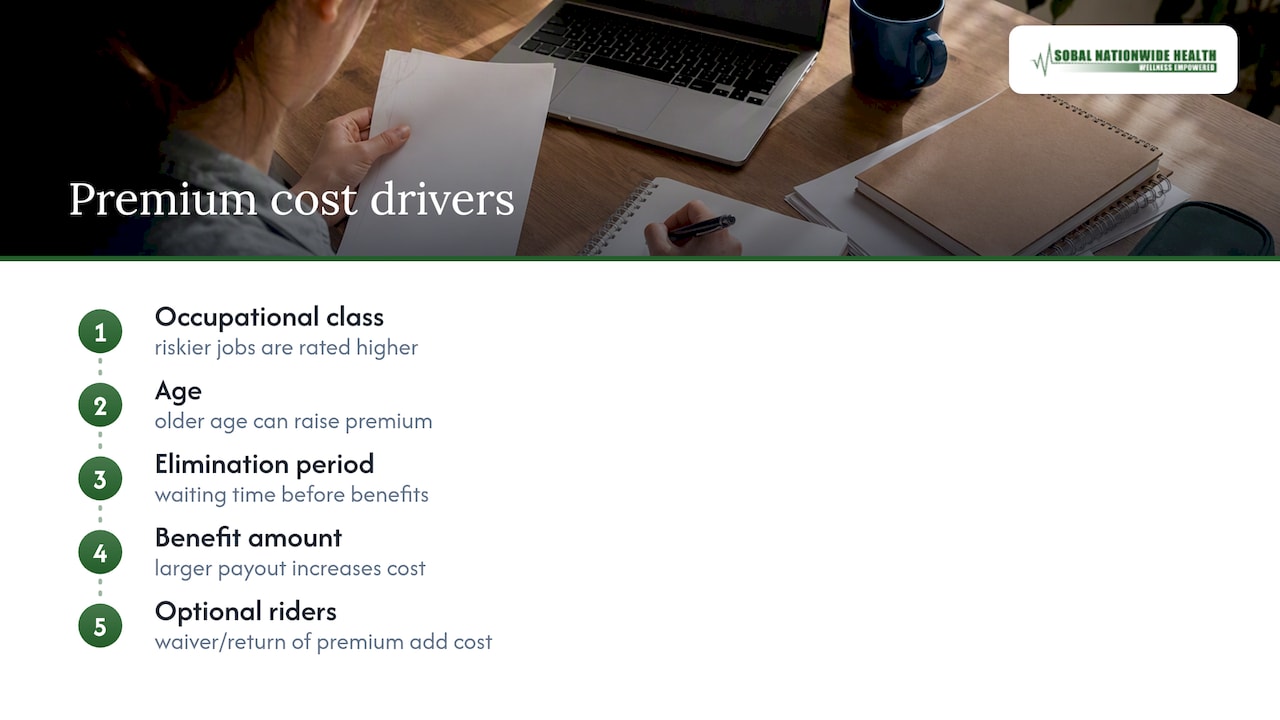
Premiums for accident insurance depend on a handful of factors: your occupational class, age, the elimination period you choose, the benefit amount, and any riders like waiver of premium or return of premium. Riskier occupations are rated differently even when the job title sounds similar, so ask your agent for the exact classification used on your quote, per NAIC guidance on disability and supplemental coverage.
On the tax side, self-employed people may be able to deduct premiums for medical care and qualified long-term care insurance as an adjustment to income on Schedule 1 (Form 1040), according to IRS guidance on medical and dental expenses. Whether a benefit payout itself is taxable depends on who paid the premiums and how, a detail worth confirming with a tax professional before you file.
Accident-only policies are classified as “excepted benefits” under federal guidance from CMS, meaning they aren’t treated as comprehensive medical insurance and don’t satisfy ACA coverage requirements on their own.
Choosing the right policy without the guesswork
Before you sign anything, run through this checklist and ask your agent these questions.
- Elimination period: how many days before benefits start, and does that match your savings runway?
- Benefit type and amount: is it a daily hospital rate, a lump sum, or both?
- Lifetime and annual limits: what’s the cap on total payouts?
- Exclusions: are certain occupations, sports, or pre-existing conditions carved out?
- Portability: can you keep the policy if your business changes or you move states?
- Waiver of premium: does the insurer waive your premium while you’re collecting benefits?
When you talk to an agent, ask directly about your occupational class and why it was assigned, request a sample claim scenario in writing, and ask how the policy would coordinate with any disability or major medical coverage you already carry.
Pro Tip: If your savings could only cover two weeks without income, prioritize a short elimination period over a lower premium. A cheaper policy that doesn’t pay until week four defeats the purpose.
How Sobal Health helps self-employed clients think this through
When we sit down with a self-employed client, the first conversation isn’t about products, it’s about cash flow. We ask how many weeks of expenses you could cover from savings, then work backward to an elimination period and benefit level that actually fits.
From there, our review typically includes:
- A side-by-side look at how different policies define benefit triggers and payout amounts.
- Access to medically underwritten plan options that aren’t always visible on the public marketplace.
- A plain-language walkthrough of exclusions so there are no surprises at claim time.
The goal is always the same: a policy that matches your real financial picture, not a generic template built for someone else’s job.
My take on picking accident coverage
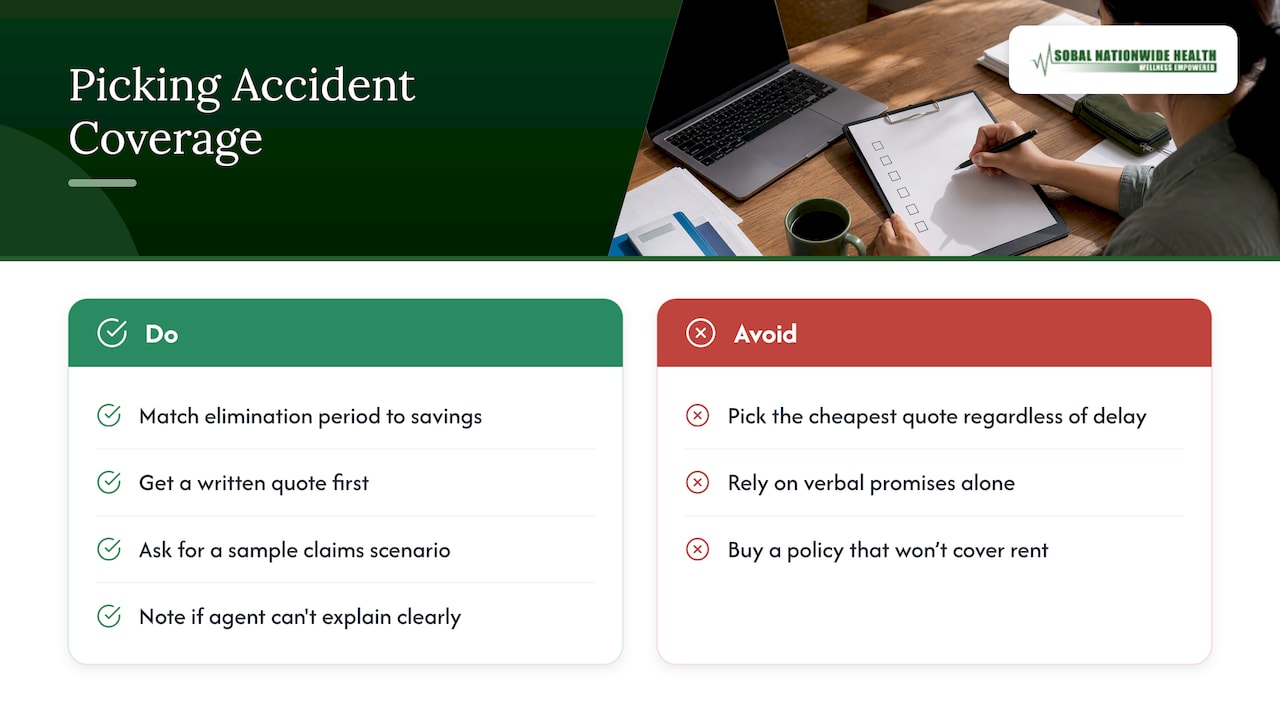
If I had to boil this down to one rule, it’s this: match your elimination period to your actual savings, not to whatever gets you the lowest quote. A cheap policy that doesn’t pay out until you’ve already missed a month of rent isn’t saving you anything.
Before you buy, get a written quote and ask for a sample claims scenario in plain language. If the agent can’t explain it clearly, that’s worth noting too.
— Bernie S
Get a policy review built around your work, not a template
Most accident and supplemental policies are written with a traditional employee in mind, someone with a steady paycheck and employer-provided benefits sitting alongside them. That’s rarely how self-employed work looks, which is why a generic quote often misses the mark on elimination periods and benefit amounts.
We walk through your cash flow first, then help you compare accident, disability, and medically underwritten health plans side by side, without sales pressure. Advisors work in English or Spanish and can also help if you’re weighing a broader self-employed health insurance strategy alongside supplemental coverage. Bring your monthly must-pay expenses and any existing policy details, and you can find a plan that actually fits your work. Start a conversation with Sobal Health to get a tailored quote.
Where to check the rules yourself
For the tax side, the IRS Topic No. 502 and Publication 502 explain which premiums self-employed people can deduct. For policy definitions and shopping tips, the NAIC’s guide to disability insurance is a solid starting point. Federal guidance on how accident-only plans are classified is outlined in the CMS excepted benefits FAQ.
Sources
- Topic No. 502 — Medical and Dental Expenses | Internal Revenue Service
- FAQs About Affordable Care Act Implementation: Excepted Benefits (CMS, Feb 13, 2015)
FAQ
Can I get personal accident insurance if I’m self-employed?
Yes, personal accident insurance is sold directly to individuals and doesn’t require an employer to sponsor it. Self-employed people can apply on their own, and underwriting typically looks at age, occupation, and health history rather than employment status.
What kind of insurance can you get if you’re self-employed?
Self-employed workers can typically access major medical plans, accident insurance, disability income insurance, critical illness coverage, dental, vision, and life insurance, either through the marketplace or private, medically underwritten plans. Each type covers a different risk, so most people combine a few based on their budget and work exposure.
Who is eligible for personal accident cover?
Eligibility generally depends on age, occupation, and sometimes health questions, rather than employment type, so freelancers, contractors, and gig workers can typically qualify. Riskier occupations may face different rating or exclusions, which is why confirming your occupational class with an agent matters.
How much does $1,000,000 in contractor insurance cost?
Pricing for contractor liability or accident coverage at that benefit level depends on occupation, claims history, and the insurer’s underwriting, so there’s no single published rate. Getting a quote from a licensed agent is the only way to see an accurate number for your specific situation.
