

An explanation of benefits (EOB) is not a bill. It is your health plan’s report of how a claim was processed, and you are not required to pay it. The amount you owe comes from the provider’s bill, after insurance payments and adjustments. If the two documents disagree, compare them line by line and follow the checklist below.
TL;DR:
- Wait for the provider’s bill, then compare dates, service codes, allowed charges, payments, and patient responsibility against the EOB before paying.
- Separate claims, processing delays, and unrecorded copays can explain gaps, but charges for unfamiliar care or balances above the EOB warrant prompt investigation.
- Contact the provider’s billing office first with your claim number and request an itemized bill; then ask your insurer about pending adjustments or allowed amounts.
- If the dispute remains unresolved, file a written dispute with copies, keep a call log, and use applicable No Surprises Act or state complaint routes.
Table of Contents
- How do you read an explanation of benefits?
- How does a provider bill differ from an EOB?
- Why don’t your EOB and bill match, and when should you worry?
- What should you do if your EOB and bill disagree?
- How long should you keep EOBs and bills, and how do appeals work?
- What do typical scenarios look like on a sample EOB and bill?
- How does your plan type change your EOB and billing?
- What terms on a medically underwritten plan’s EOB or bill may be unfamiliar?
- How do deductibles and out-of-pocket maximums change what each document shows?
- How can your EOB help you verify payments and spot errors?
- What can an adviser do with your EOBs?
- FAQ
- Sources
How do you read an explanation of benefits?
Think of the EOB as your insurer’s receipt for a claim. CMS’s sample EOB labels the key fields: Provider Charges, Allowed Charges, Paid by Insurer, and What You Owe. Here is what each one means in plain English:
- Provider charges: the price the doctor or hospital listed for the service.
- Allowed charges: the amount your plan agreed to treat as the price for that service.
- Paid by insurer: what your plan sent to the provider.
- What you owe (patient responsibility): your share, such as a deductible, copay or coinsurance.
Two other spots deserve a look. Remark codes explain why a charge was reduced or denied, and the insurer’s contact number is usually printed nearby for questions.
A “what you owe” line can also show up even if you already paid at the front desk. Government sample EOBs note that payments made directly to the provider may not be reflected until claims are reconciled.
When you scan the statement, check each line item: the office visit, any lab work, and any imaging.
The federal bottom line: CMS states plainly that an EOB is not a bill, and it sits beside the provider’s separate request for payment.
How does a provider bill differ from an EOB?
The bill comes from the doctor, clinic or hospital, and it is the document you pay. The EOB comes from your insurer and only reports what happened to the claim. CMS advises waiting for the provider’s bill, then comparing its patient balance to your EOB before you send money.
Between the sticker price and your final balance, a few steps happen:
- The provider lists its full charge.
- Your plan applies its allowed amount. The difference is a contractual write-off, which in-network providers generally cannot collect from you. HealthCare.gov’s glossary defines these terms.
- Your plan pays its share.
- Whatever remains, plus any copay or deductible portion, becomes your balance.
Why might the bill still look different from the EOB? Timing is the usual reason. The provider may bill before your insurer finishes processing, or you may have paid a copay at the visit. Separate claims can also split one appointment into several documents. Sometimes the bill is simply more itemized than the EOB summary.
None of that is automatically a problem. It becomes one when the bill asks for more than the EOB says you owe.
Why don’t your EOB and bill match, and when should you worry?
Most mismatches are routine. The EOB and the bill follow different paths, so they often arrive at different times and hold overlapping but distinct information.
Common causes, roughly from harmless to serious:
- Processing lag. The insurer or provider finishes its part first, so one document lands before the other.
- Multiple claims for one visit. If several providers billed (surgeon, anesthesiologist, lab), you may get several EOBs for a single event, as CMS’s bill guide explains.
- Payments not yet recorded. A copay you paid at check-in may not appear on the first statement you see.
- Balance billing. This happens when an out-of-network provider bills you for the gap between its charge and what your plan paid. The No Surprises Act, effective January 1, 2022, protects patients from many unexpected out-of-network balance bills and offers dispute routes when a bill exceeds permitted amounts.
- Red flags. A bill above the EOB’s allowed amount or patient balance, services you do not recognize, or charges for care you never received. An unfamiliar item may be a mistake, or it may signal medical identity theft, so report it to your insurer right away.
Processing delays, multiple claims and unrecorded payments may be resolved with a phone call. Balance billing and suspicious charges deserve prompt attention.
What should you do if your EOB and bill disagree?
Work through these steps in order. Many problems can be resolved by working through the steps below.
- Gather your documents. Save the EOB, the provider bill, receipts and records of any payments. CMS advises keeping EOBs as primary evidence for disputes.
- Compare line by line. Match dates of service, service codes and dollar amounts. Write down every difference.
- Call the provider’s billing office first. Have the claim number ready and ask for an itemized bill. Medical experts note that many discrepancies are administrative errors that can be corrected without formal appeals. A provider’s patient-resources page, like this billing and insurance page from a New Jersey gastroenterology practice, often lists the right contact.
- Call your insurer. Ask why the allowed amount differs from the bill, or whether an adjustment is still pending.
- Escalate in writing if it stays unresolved. File a written dispute with the provider or insurer, use the No Surprises Act dispute route if it applies, and contact your state consumer protection office. If the bill goes to collections, the CFPB explains that you can dispute the debt in writing and may have protections under the FDCPA and FCRA.
Pro Tip: Send a short written summary with copies (never originals) by certified mail, and keep a log of every call: date, time, name and what was agreed.
How long should you keep EOBs and bills, and how do appeals work?
Keep every EOB and bill at least until the claim is fully resolved and nothing is left in dispute. Because EOBs serve as primary evidence if a problem surfaces later, keep them until you no longer need them for a dispute or other records. Check your own tax and insurance needs if you plan to claim medical costs.
If your insurer refuses to pay a claim, you can appeal. The process has two tiers: an internal appeal with your insurer, then, if you are eligible, an independent external review. Healthcare, and insurers must tell you how. Contact information for reviewers is kept on the external review page.
Evidence that strengthens any appeal or dispute:
- The EOB and the itemized provider bill
- Receipts and proof of payments you already made
- Emails or letters exchanged with the provider or insurer
- Any preauthorization or predetermination letters
- Your call log
The CFPB’s avoiding medical debt toolkit also recommends organized records and written notices with copies attached.
What do typical scenarios look like on a sample EOB and bill?
Numbers help here. The figures below are made up for illustration only.
Scenario one: a routine office visit. If the EOB and provider bill show matching amounts after the plan processes the claim, the documents line up. Confirm the bill matches the EOB before paying.
Scenario two: the bill that is too high. If the bill asks for more than the EOB’s patient balance, call the billing office with the claim number and ask for clarification or a correction. This is the red flag CMS describes.
Scenario three: multiple EOBs for a surgery. The surgeon, anesthesiologist and facility may bill separately. Match each EOB to the corresponding provider bill.
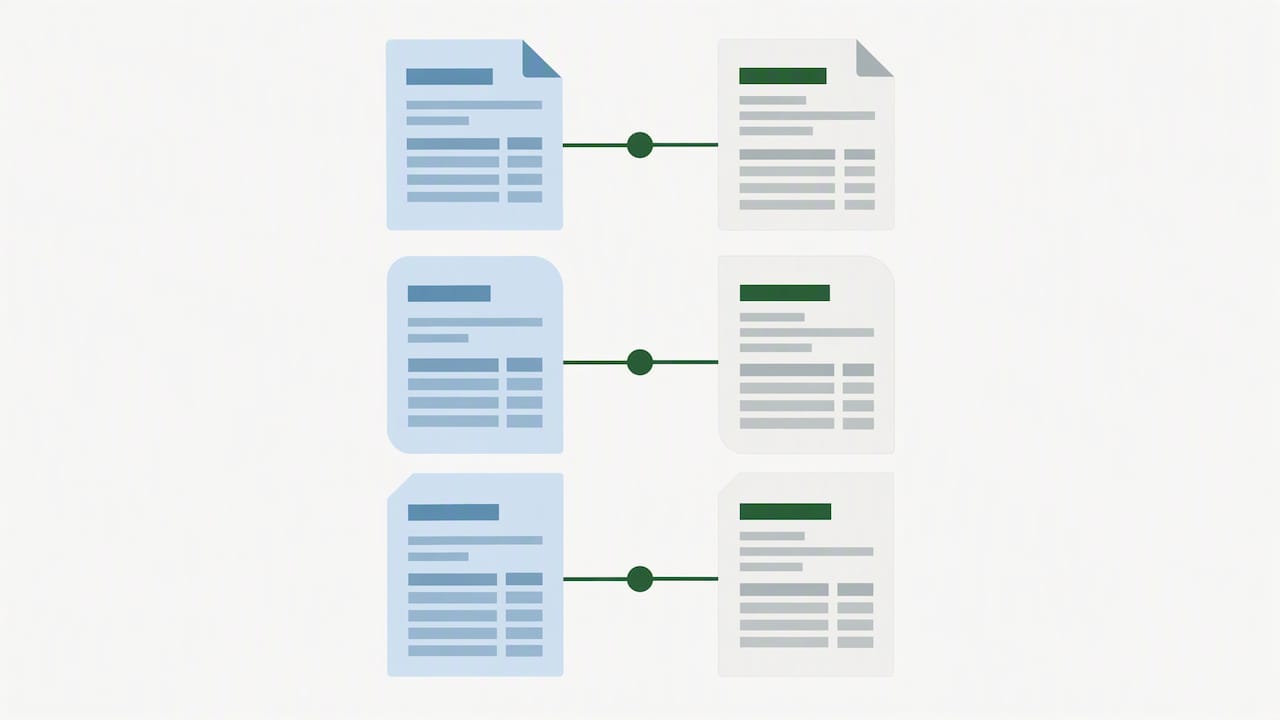
Scenario four: the early EOB. An EOB lists an amount under “what you owe,” but no bill has come. Wait. CMS suggests holding off on payment until the provider’s bill arrives, then compare the two.
Scenario five: paid at the desk. You paid a copay at check-in, yet the EOB still lists an amount owed. That can happen because the insurer’s records may not reflect a payment made directly to the provider. Keep your receipt and confirm the bill credits it.
How does your plan type change your EOB and billing?
The EOB format is broadly similar across plans, but the rules behind the numbers differ. Marketplace plans must follow the federal rules and standard terms that HealthCare.gov’s glossary describes, including its appeal rights. Private medically underwritten plans are designed differently, and their benefits, networks and cost-sharing can look different on paper.
Here is what that means when a statement lands in your mailbox:
- Network structure. Your allowed amounts depend on the network your plan uses. A broad nationwide PPO and a narrow regional network can price the same visit differently.
- Plan wording. Medically underwritten plans may use their own terms for benefit limits, exclusions and review steps. The EOB still follows the same basic layout, but the remark codes may point to plan rules you should read in your policy.
- Legal protections. Which protections apply to you, and how disputes are handled, can depend on how your plan is regulated. Check your plan documents, and ask your insurer which appeal routes apply to you.
- Employer plans. Employer-sponsored plan design affects balance billing exposure too. One partner’s analysis, RBP vs PPO: Employer Risks Under the No Surprises Act, looks at how plan design and the No Surprises Act interact.
If you are unsure which category your plan falls in, our resource guide is a good place to start, and our brokers are happy to read through your policy with you.
What terms on a medically underwritten plan’s EOB or bill may be unfamiliar?
Medically underwritten plans screen applicants on health history, which is why they can be priced differently from marketplace coverage. Because they work differently, a few terms show up more often. We cover the broader picture in our guide to plan types that still underwrite.
Terms to watch for on your statements:
- Exclusion or pre-existing condition limitation. A condition your plan does not cover, or covers only after a waiting period. A denial may carry a remark code pointing to it.
- Benefit maximum. A cap on what the plan will pay for a service, such as a set dollar amount per day or per year.
- Fixed indemnity payment. Some supplemental plans pay a flat amount per event, no matter what the provider charged. That payment will not match the bill, and it is not supposed to.
- Predetermination. A request to the insurer to review a planned service before you receive it, so you know what the plan expects to pay.
- Usual and customary rate. A benchmark some plans use to decide what they consider a reasonable charge.
If a term on your EOB is not defined, call the number printed on it and ask. Insurers expect those calls. Also remember that the reconciliation habit works the same way on any plan: compare the EOB’s patient balance with the bill, then ask about gaps.
How do deductibles and out-of-pocket maximums change what each document shows?
Your deductible is what you pay before the plan starts sharing costs. Your out-of-pocket maximum is the ceiling on what you pay in a plan year. Both change what “what you owe” looks like, and both can make an EOB and a bill look off when they are not. Our guides on deductibles and coinsurance vs copay walk through the math.
Take an illustrative case. If you have paid part of your deductible and receive a new covered service, some of its allowed amount may go toward the remaining deductible. Coinsurance may then apply to the rest, so the EOB’s patient responsibility can reflect both.
Where it gets confusing:
- Claim order. Insurers apply claims in the order they process them, not the order you received care. Two similar visits can show different patient balances for that reason.
- Running totals. The EOB often shows how much of your deductible and out-of-pocket maximum you have used. Check that figure against your own records.
- Hitting the maximum. Once you reach your out-of-pocket maximum, the plan should pay covered in-network services in full. A bill that still asks for coinsurance after that deserves a call. See our guide to deductibles, copays and out-of-pocket maximums for how these pieces fit together.
- Timing gaps. A bill may be calculated before a related claim processed, which changes the deductible balance.
When the bill and EOB disagree on a deductible amount, ask the insurer for the accumulator, meaning the running tally, and have the provider use it.
How can your EOB help you verify payments and spot errors?
Your EOB is the best independent check you have, because it records what your insurer was billed for and what it agreed to pay. The FTC’s workshop guidance suggests a simple routine: verify the dates, services and amounts, and if an item is unfamiliar, call the provider or insurer to confirm it was not a mistake.
A fast review checklist:
- Date of service. Does it match a visit you remember?
- Provider name. Is it someone who treated you?
- Service description or code. Does it match what actually happened? A quick lookup of the code can reveal a more expensive procedure than you received.
- Duplicates. The same service listed twice on the same day is a common billing error.
- Math. Does provider charge minus write-off minus insurer payment equal your patient responsibility?
- Network status. Was an in-network provider processed as out-of-network? That can change your cost sharing.
Medical identity theft is rarer, but it is the reason to read every EOB, not just the ones that come with a bill. NAIC guidance says to report suspicious claims for services you never received to your insurer immediately.
If something looks wrong, start with the provider’s billing office. Many errors are administrative and can be fixed quickly, and the steps above show how to escalate if they cannot.
What can an adviser do with your EOBs?
Here is my view after years of reading these statements with clients: a useful habit is to match each EOB to its bill when both arrive. Errors are easy to fix early and miserable to untangle after a collections letter shows up. Use predetermination before planned procedures, and ask questions whenever a statement uses a word you do not recognize.
Some situations deserve a second pair of eyes: complex denials, several confusing claims for one event, or a balance bill that seems to exceed your protections. That is where we come in. At Sobal Nationwide Health, we review plans, explain insurer letters in plain English and help you work out what questions to ask. If you want help with your plan, our personal and family coverage page is a good place to begin, or reach us through our site.
— Bernie S
This article is general information, not a substitute for advice from a qualified financial advisor. Consult a qualified financial professional about your own circumstances before acting on anything here.
FAQ
What happens if I get an EOB but no bill?
Usually it means the provider has not billed yet, or your plan covered the whole claim. CMS advises waiting for the provider’s bill before paying anything. If a bill never comes, call the provider to confirm your balance.
Why is my EOB different than my bill?
The documents come from different sources and are often produced at different times. Separate claims, payments made at the visit or pending adjustments can all cause gaps. A bill higher than the EOB’s patient balance is a red flag worth a call.
Should I pay a medical bill without an EOB?
It is safer to wait, because the EOB confirms what your plan agreed you owe. Compare the two documents once both arrive. If the provider presses for payment before then, ask for an itemized bill and request a short hold while your insurer finishes processing.
How long after an EOB does the bill come?
There is no fixed timeline. EOBs and bills often arrive at different times, and either one may come first. If weeks pass and you have an EOB showing a balance, ask the provider’s billing office whether a statement is on its way.
Sources
- Cms
- What should I know about debt collection and credit reporting if my medical bill was sent to collections? | Consumer Financial Protection Bureau
