

Level funded health plans are a sensible option for many small and mid-size employers who want predictable monthly payments and can live with some controlled claims risk. You pay one fixed amount each month, and stop-loss insurance caps your exposure on big claims. If your claims run low, you may get money back. If they run high, your renewal can climb.
TL;DR:
- Refunds depend on contract terms: carriers may retain part of unused claims or require renewal, so request a sample reconciliation statement and confirm rollover rules.
- Practitioners report potential savings of 5% to 15% in some markets, but underwriting may reject groups, and high claims can erase savings or raise renewals.
- Plans often suit groups of roughly 50 to 100 or more employees, especially younger workforces with cash reserves and staff who can review claims reports.
- Employers remain ERISA fiduciaries, and Form 5500 reporting may apply; verify obligations and get specific and aggregate stop loss attachment points in writing.
Table of Contents
- What is a level funded health plan, and how does it differ from other models?
- How do level funded plans work across the plan year?
- What do costs and savings really look like?
- What risks and compliance duties come with level funding?
- Which employers benefit most from level funding?
- What should you check in the contract and ask your carrier or TPA?
- Where we stand on level funding
- Get a no-pressure plan review from our team
- FAQ
- Sources
What is a level funded health plan, and how does it differ from other models?
A level funded plan is a hybrid. Your business funds part of its own employees’ claims (the self-funded piece), but you pay a flat monthly bill that feels much like a fully insured premium. Regulators still treat these arrangements as self-funded for compliance purposes, even though they are marketed as similar to fully insured plans.
Here is who carries the risk under each model:
- Fully insured: The carrier pays all claims. You pay a premium, and you never see a refund.
- Level funded: You carry claims risk up to a set limit, and stop-loss insurance covers the rest. Unused claim dollars may come back to you.
- Self-funded: You pay claims as they happen. Stop-loss is optional, and your costs swing from month to month.
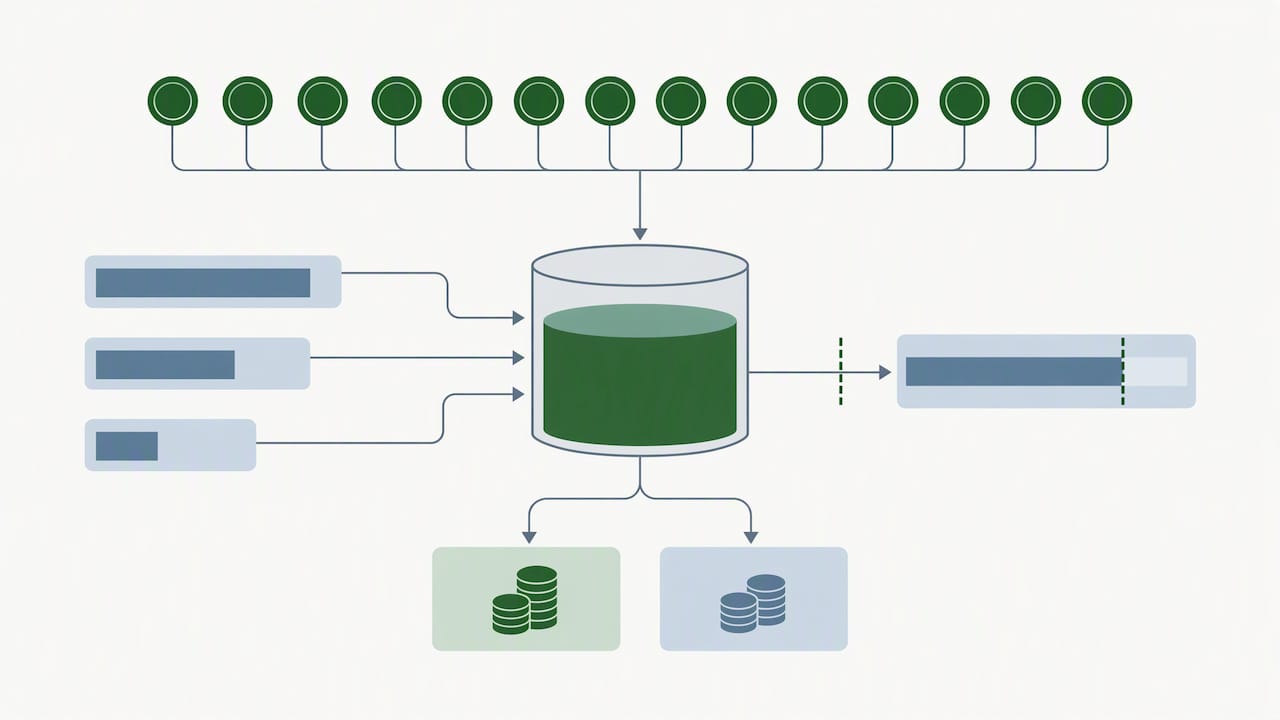
Your flat monthly payment usually has three parts. One is a claims reserve, the money set aside to pay your employees’ medical bills. Another is the stop-loss premium that protects you from large claims. The last is administrative fees for the third-party administrator (TPA), who processes claims and runs the plan day to day. Our level funded vs fully insured comparison walks through these differences in more depth.
How do level funded plans work across the plan year?
Think of the plan year as a budget that gets checked at the end. Here is how it flows:
- Underwriters estimate your group’s expected claims for the year using census data, ages, and sometimes health information.
- That annual estimate, plus stop-loss and admin costs, gets divided into twelve equal payments.
- Each month, claims are paid from the reserve while you keep paying the same amount.
- Stop-loss kicks in when claims cross its limits.
- After the year ends and claims run out, the carrier or TPA reconciles what was paid against what was budgeted.
Stop-loss has two layers, and the difference matters. Specific stop-loss caps what you owe for any single person. Once one employee’s claims pass the specific attachment point, the stop-loss carrier pays the rest. Aggregate stop-loss caps what you owe for the whole group over the year. If total claims pass the aggregate attachment point, you are protected from further group-wide losses.
Reconciliation is where contracts differ most. Some carriers return all unused claim dollars, while others keep a retention percentage or tie refunds to renewing with them. Rollover rules and renewal conditions are spelled out in the contract language, and stop-loss is what caps your liability. Monthly accommodation and minimum-premium terms can also shift cash flow, since they decide how much you owe when claims land unevenly.
Pro Tip: Ask for a sample year-end reconciliation statement before you sign. Seeing how a refund is calculated tells you more than any brochure.
What do costs and savings really look like?
Level funding is no longer a niche product. Among small firms, 37% of covered workers are enrolled in level-funded plans, according to the KFF 2025 Employer Health Benefits Survey, and prevalence was similar in 2024.
37% of covered workers at small firms (10 to 199 workers) are in level-funded plans, so you would not be an early adopter.
Industry practitioners say employers can save 5–15% in some markets, though underwriting can also decline quotes. Savings tend to come from a few places:
- Lower carrier margin and risk charges than a fully insured premium
- Refunds of unused claim dollars after reconciliation
- Not paying certain state premium taxes on self-funded claims, where that applies
- Transparent claims data that helps you target high-cost areas
Your workforce changes the math. A younger group with few dependents usually produces fewer claims and a better chance of a refund. Volatile claims, such as a single large case, can erase that edge.
Consider two illustrative scenarios. In a low-claims year, your group uses less than the reserve and you receive a refund, depending on your contract’s terms. In a high-claims year, stop-loss reimburses the big claims, but your renewal rate may rise sharply or the carrier may add a higher specific deductible for the person who triggered it.
What risks and compliance duties come with level funding?
The compliance side is where small employers get surprised. Under ERISA, you are a fiduciary of the plan, and the Department of Labor explains that fiduciary duties and Form 5500 reporting can apply depending on plan size and funding structure. Fiduciary status and reporting rules differ by funding structure, so confirm yours before enrollment.
A few things to keep on your radar:
- Some states set minimum attachment points for stop-loss, which limits how thin a protection layer a carrier can sell you.
- Regulators and lawmakers have been scrutinizing the stop-loss market, and federal proposals could change how it is regulated and who can access it.
- Federal rulemaking discussions have touched on how stop-loss is defined, so the rules may keep shifting.
- Restrictive stop-loss wording, subrogation language, and narrow eligibility criteria can leave you holding claims you assumed were covered.
None of this is a reason to avoid the model. It is a reason to read the contract carefully and bring in benefits counsel early.
Which employers benefit most from level funding?
Level funding tends to fit employers who are comfortable with a little uncertainty. Practitioners often point to groups of roughly 50 to 100 or more employees, though smaller groups are sometimes quoted. Employee count and dependents both affect stop-loss pricing, since more covered lives usually smooths out claims swings.
Profiles that tend to do well include:
- Groups with younger workers and lower expected claim rates
- Employers with a CFO or finance lead who will read monthly claims reports
- Businesses with enough cash reserves to handle a rough renewal
- Companies that see level funding as a steppingstone toward full self-funding, the way industry experts describe it
If your group has several known high-cost claimants, be cautious. Underwriters can decline quotes or price stop-loss steeply. A broader look at group coverage can help, and our group health insurance page covers those options.
What should you check in the contract and ask your carrier or TPA?
Use this list in vendor conversations and at renewal:
- Refund calculation. Ask exactly how unused claims turn into a refund, and whether any is withheld.
- Retention percentage and rollover. Find out what the carrier keeps and whether leftover funds carry into next year.
- Minimum premium and monthly accommodation. Confirm how your cash flow is affected when claims arrive unevenly.
- 12/18 clauses. Check how long claims can be incurred and paid and still count toward your coverage.
- Attachment points. Get both specific and aggregate levels in writing, and ask what changes at renewal.
- Renewal triggers. Ask what claims activity leads to a rate jump or a new deductible for one person.
- Claims data access. Confirm how often you receive reports, and in what format.
Request three documents too: claim run-outs, the stop-loss renewal history, and a breakdown of administrative fees. Escalate to your CFO when cash reserves are involved, to benefits counsel when contract language is unclear, and to a broker when you want an independent read. For a structured approach to side-by-side evaluation, see our guide on how to compare health insurance plans for small businesses.
Pro Tip: Ask each vendor the same ten questions in writing. Matching answers make apples-to-apples comparison possible.
Where we stand on level funding
We look at level funding the way a careful buyer should: as one option among several, judged by the contract and your workforce, not the sales pitch. We advise small employers across many states, we can open the door to medically underwritten plans, and we help with enrollment. When you bring us a quote, we help you read the stop-loss language, question the attachment points, and make sense of the claims data you are given. Employees are the reason any of this matters, so we also keep an eye on the value coverage brings to your team.
— Bernie S
Get a no-pressure plan review from our team
Nobody should sign a stop-loss contract they have not had a second set of eyes on. Our brokers help employers weigh level funded quotes against other group options, with no sales pressure and plain-English answers in English or Spanish. We cover many states, and our clients have reported savings on their coverage.
Ready for a second opinion? Request your business plan review and bring us the quote you already have.
This article is general information, not a substitute for advice from a qualified financial advisor. Consult a qualified financial professional about your own circumstances before acting on anything here.
FAQ
What is level-funded health insurance?
Level-funded health insurance is a hybrid plan where you pay a fixed monthly amount that covers expected claims, stop-loss insurance, and administration. If claims come in below the estimate, you may receive a refund, depending on your contract.
What are the cons of a level funded health plan?
The main trade-off is that you keep some claims risk, so a high-claims year can raise your renewal or lead to a higher deductible for one person. Contracts also vary on refunds and retention, so the details matter. Underwriting can decline some groups as well.
What share of small firms use level-funded plans?
37% of covered workers at small firms with 10 to 199 workers are enrolled in level-funded plans, based on KFF’s 2025 survey. That makes it a common option, not an unusual one.
What do tier 1, tier 2, and tier 3 mean in health insurance?
Tiers usually describe provider or drug networks, where tier 1 costs you the least and higher tiers cost more. Definitions differ by carrier, so check the plan’s own documents for how each tier is set.
Sources
- 2025 Employer Health Benefits Survey | KFF
- Understanding Your Fiduciary Responsibilities Under A Group Health Plan | U.S. Department of Labor
- The Shifting Regulatory Landscape for Level-Funded Plans: An Alternative for Group Health Insurance – Lexology
