






An association health plan (AHP) is a group health plan offered through an employer group or association, so several small employers can buy coverage together. Since the Department of Labor rescinded its 2018 AHP rule in 2024, only genuine, long-standing employer associations qualify, and working owners with no employees generally cannot join, so many small businesses compare AHPs with SHOP and private PPO coverage.
I’m Bernie Sobalvarro, a licensed broker, and this is the plain-English version of what I walk business owners through. If you earn too much for big marketplace subsidies and want to keep your choice of doctors, the sections below show where an AHP fits and where a private plan may fit better.
TL;DR
- An AHP is a group plan run through an employer association, and states can enforce their own insurance rules on it.
- A 2024 Department of Labor action restored stricter tests for which associations count, so not every “association” offer is a real AHP.
- Owners with no common-law employees generally are not treated as employers or employees for AHP purposes.
- SHOP and private medically underwritten PPO plans are the other routes to compare, each with its own tradeoffs.
- We don’t offer Medicare or Medicaid. Our focus is people under 65 who want private, PPO-style coverage.
Table of Contents
- What an association health plan actually is
- What changed: the 2018 rule and the 2024 reversal
- Who can join an association health plan
- How a small business is defined
- AHP vs. SHOP vs. a private PPO: an honest comparison
- Five questions to ask before joining any association plan
- Taxes: what owners and the self-employed can deduct
- Where we see AHPs fit, and where they don’t
- Our perspective
- Our business and family coverage
- FAQ
- Sources
What an association health plan actually is
Think of an AHP as a buying club for health coverage. Instead of each small employer shopping alone, employers who belong to the same association take part in one group health plan. The federal government’s health insurance glossary defines it as a group health plan that employer groups and associations offer to their employees or members.
The appeal is easy to see. A small business is usually rated as a small group, while a very large group can sit outside some federal ACA rules. Policy researchers note that plans covering more than 100 employees can qualify as large groups that are not subject to certain federal ACA mandates. Pooling is how small employers hoped to get that treatment.
The reality is more regulated than the pitch. Policy analysts at the Goldwater Institute observe that, despite years of rule changes, small employers keep looking at AHPs as a way to potentially lower costs compared with the traditional small-group market. “Potentially” is the key word: nothing about an AHP guarantees a lower premium for your business.
What changed: the 2018 rule and the 2024 reversal
In 2018, a federal rule loosened the definition of who could form an association, making it easier for loosely connected businesses to sponsor a plan. That rule was later invalidated in court, and in 2024 the Department of Labor formally rescinded it. The department’s fact sheet on the rescission explains that the older, stricter criteria for a bona fide employer group are back in place.
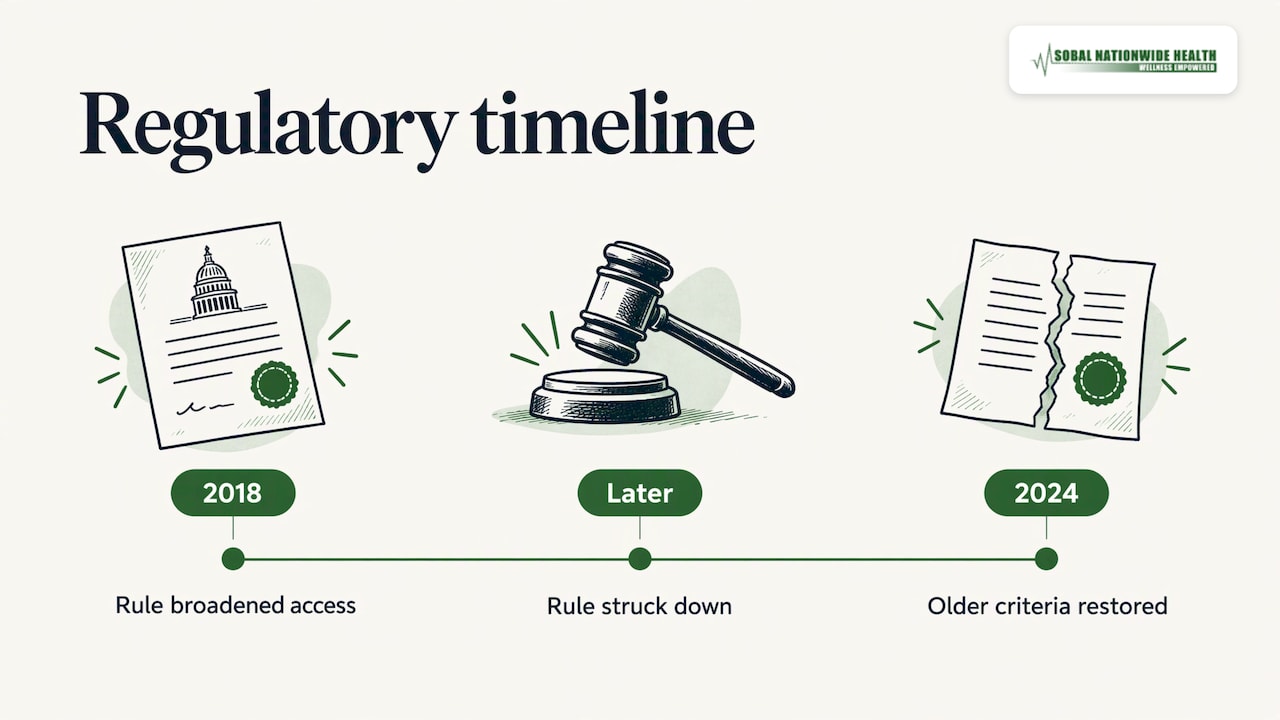
Why does that matter to you? The department noted that plans formed under the 2018 approach might not cover the essential health benefits required in the individual and small-group markets, which could leave members underinsured. It also noted such plans could attract healthier people and push up premiums elsewhere. If someone offers you an “association plan” today, you want to know it is a real, compliant one.
Who regulates an AHP
AHPs are mainly governed by the federal Employee Retirement Income Security Act (ERISA). They are also treated as multiple employer welfare arrangements, or MEWAs, which means states keep the authority to enforce their own insurance laws and consumer protections on these plans. In practice, the rules your plan follows can depend on your state.
New York is a useful example. Its insurance regulator says association group policies that provide hospital, medical or surgical coverage to individual and small-employer members must cover essential health benefits and comply with ACA and state consumer protections. The same regulator stresses the “look-through” idea: coverage is rated based on the size of the member (individual or small group), not the size of the whole association. We only work in our licensed states, so check how your own state treats these plans before you sign anything.
Who can join an association health plan
This is where many owners hit a wall. Under the Department of Labor’s long-standing guidance, a bona fide association must:
- have business or organizational purposes unrelated to providing benefits,
- have members with a genuine organizational relationship, and
- let participating employers exercise real control over the plan.
The department also looks at how the group was formed, how members were solicited, whether relationships existed before the plan, and what rights members have. A group created mainly to sell insurance is a red flag.
The second hurdle is about you. According to the same federal fact sheet, working owners without common-law employees generally are not recognized as employers or employees for AHP participation. If you are a solo 1099 contractor, realtor or owner-operator trucker with no staff, an AHP is generally not your route. A common-law employee is someone you control in how, when and where they work, as opposed to an independent contractor.
If you have two to thirty employees, you may be eligible to join a legitimate AHP, but you still need to confirm the association is real and the plan is compliant in your state.
How a small business is defined
There is no single definition across every program. For the small-group market, federal materials describe that in 2014 it served employers with 1 to 100 employees, with states allowed to keep the limit at 50 until 2016. SHOP has its own rules, covered next. For a business with 2 to 30 employees, you fall within these ranges either way.
AHP vs. SHOP vs. a private PPO: an honest comparison
Here is how the main options line up for a small business owner. None is best for everyone, so the table is about fit.
| Association health plan | SHOP marketplace | Private medically underwritten PPO | |
|---|---|---|---|
| Who it’s for | Employers in a genuine association | Small employers with qualifying employees | Healthy owners, families and employees who can qualify |
| Owner with no employees | Generally not eligible | Generally not eligible | Can apply as an individual or family |
| Rules | ERISA plus state MEWA laws | Federal marketplace rules | Carrier and state rules |
| Health questions | Depends on the plan and state | Not part of enrollment | Yes, the carrier reviews your health history |
| Doctor choice | Depends on the plan’s network | Depends on the plan chosen | PPO designs with broad, nationwide access |
SHOP, the government option
The Small Business Health Options Program is the federal marketplace for small employers. To qualify, you generally need at least one full-time-equivalent employee other than owners, spouses, family members and partners, and 70% of employees who are offered coverage must enroll. If your team is mostly family or you are solo, SHOP usually won’t work. For a walk-through of the credit side, see our guide to small business health insurance tax credits.
SHOP’s strength is its simplicity: standard plans, clear rules, no health questions at enrollment. The tradeoff many of my clients mention is that premiums and networks may not match what they want, especially if they earn too much for subsidies and want broad doctor choice.
Private PPO coverage
A PPO (preferred provider organization) plan lets you see doctors inside or outside a network, usually at different cost-sharing levels, and without a referral for specialists. Private medically underwritten plans are not sold on the public marketplace. The carrier asks about your health history before approving you, which is why they tend to suit healthy people. Some pre-existing conditions can still be covered, depending on the plan, so ask rather than assume.
For owners who earn too much for large subsidies, these plans are often worth a quote. Our page on how medically underwritten insurance works and who it fits goes deeper, and our plan-types guide shows what to check.
On the other side, a plan that reviews your health is not the right tool for everyone, and that is okay. Marketplace plans accept applicants regardless of health history, so the right pick depends on your situation, and a licensed broker can lay both side by side.
Five questions to ask before joining any association plan
Whether it is an AHP or something marketed as one, run through these before you commit.
- Is the association real? It should exist for reasons other than selling insurance, with members who share a genuine business relationship and a say in running the plan.
- Which state’s rules apply? Because states can enforce their insurance laws on these arrangements, ask which regulator oversees the plan and how it is licensed.
- Are essential health benefits covered? These are the core categories of care the ACA requires in individual and small-group coverage, and you should know whether your plan includes them.
- How are you rated? Under the look-through approach, your coverage is rated as an individual or small group, not as part of a big pool. Ask how your premium is calculated and how it can change at renewal.
- What is the network? Look at your own doctors, hospitals and prescriptions, not the brochure.
Bring the plan documents to a broker for a second read. A policy review costs you time, not a commitment.
Taxes: what owners and the self-employed can deduct
Health premiums are one place the structure of your business matters. Self-employed people may be able to deduct premiums on their federal return if the plan is established under their business and meets IRS requirements. The deduction is typically reported on Schedule 1 of Form 1040, and the IRS instructions for Form 7206 explain how to work out the amount. Your tax professional can confirm what applies to you.
If you have employees, you may also offer premiums through payroll using a pre-tax arrangement such as Section 125 payroll deductions. For the solo version of the story, we wrote a step-by-step on the self-employed health insurance deduction and a guide for sole proprietors.
Where we see AHPs fit, and where they don’t
A legitimate AHP can make sense for a business that already belongs to a real trade or professional association and wants group coverage through it. It tends to be a weaker fit when:
- you are a solo owner with no employees, who generally can’t participate,
- the “association” was formed mainly to sell insurance,
- you want one specific doctor or hospital system and the network doesn’t include it, or
- you cannot get clear answers about which state regulator oversees the plan.
In those cases, comparing a small group plan, SHOP (if you qualify) and private PPO coverage usually gets you further.
Our perspective
Most owners who call me are not asking, “What is an AHP?” They are asking, “Why is my premium so high, and can I keep my doctors?” The association label is just one possible answer.
Here is how I think about it. The premium gets you in the door, but the network, the deductible and the out-of-pocket maximum decide how the plan feels when you actually use it. I would rather you understand all four than chase the lowest monthly number.
For healthy self-employed people, families and small business owners under 65 who earn too much for large subsidies, private medically underwritten PPO plans are often worth a close look. They are not sold on the public marketplace, and they can offer nationwide doctor choice. We are a broker, so we can place you with a plan from several carriers and explain it in English or Spanish, with no sales pressure.
I can’t promise a particular price or that you will be approved, because underwriting and rates depend on you and your state. What I can promise is a straight comparison. We offer personalized advisory, policy review and enrollment support, and we also help small businesses with group health packages.
Bernie S
Our business and family coverage
Sobal Health is a licensed health insurance brokerage serving self-employed individuals, families and small businesses in 31 states. We offer business health insurance, including group health packages, and personal and family coverage such as medically underwritten health plans, dental, vision, accident, critical illness and disability income. We also help with ACA marketplace plans. Prices are not published because they depend on the carrier, your state and your application.
If you want a second opinion on an association offer, or a side-by-side of group, SHOP and private PPO options, start with our business insurance page, or browse the education library for plain-English guides. Looking for state detail? Our Florida small business guide, Georgia options and checklist and Texas small business guide are good starting points.
FAQ
Can a sole proprietor join an association health plan?
Generally no. Federal guidance says working owners without common-law employees are generally not recognized as employers or employees for AHP participation. A sole proprietor can look at individual and family coverage instead, including private PPO plans, and may be able to deduct premiums.
Are association health plans cheaper than regular small-group insurance?
Not automatically. Researchers say small employers look to AHPs as a way to potentially lower costs, but the price depends on the plan, your state and how you are rated. Because coverage is rated by your own size under the look-through approach, compare a real quote, not a general claim.
What is the difference between an AHP and SHOP?
An AHP is a group plan offered through an employer association. SHOP is the federal marketplace for small employers, and it generally requires at least one qualifying employee other than owners and their families, plus 70% participation among eligible employees. Each follows different rules.
Can I deduct health insurance premiums if I’m self-employed?
You may be able to, if the plan is established under your business and meets IRS requirements. The amount is worked out on Form 7206 and reported on Schedule 1 of Form 1040. Ask your tax professional how it applies to your return.
Do you help with Medicare or Medicaid?
No. We don’t offer Medicare or Medicaid. We help people under 65 who want private, PPO-style coverage, plus small businesses looking at group options.
Sources
- MEPS-IC Glossary of Health Insurance Terms
- Association Health Plans and Small Business Health Insurance Exchanges in the Affordable Care Act
- Expanding Access to Association Health Plans
- Fact Sheet: Department of Labor Rescinds Invalidated Rule on AHPs
- Association Health Plans ERISA Compliance Assistance
- New York DFS: Industry Questions About Association Health Plans
- Information About Day 1: SHOP and the Small Group Market
- Find out if your small business qualifies for SHOP
- Instructions for Form 7206 (2025)